



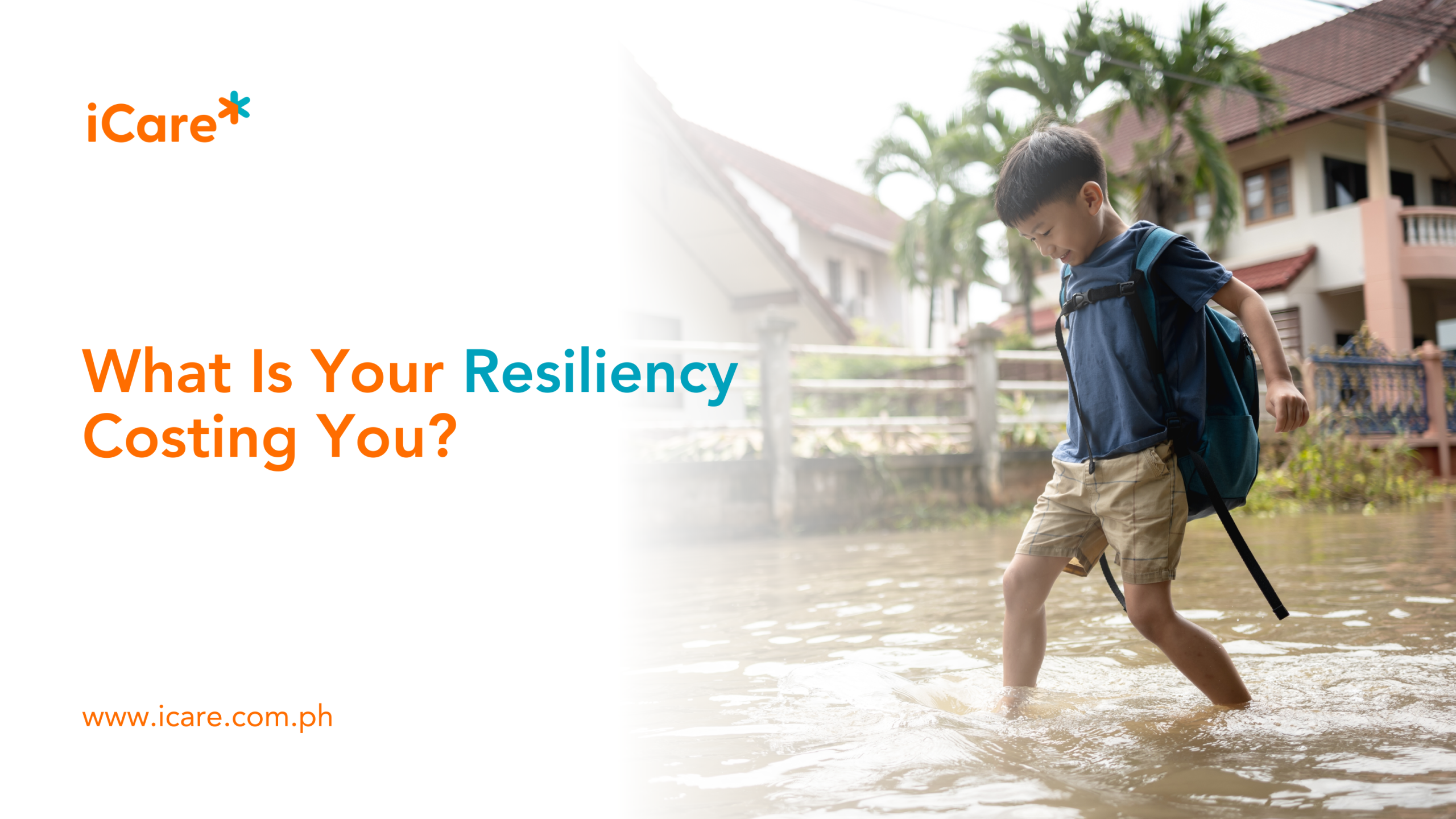
July 3, 2026 What Is Your Resiliency Costing You?
Filipinos are known for our two best qualities: hospitality and resiliency. What seems like virtues can also be the very thing that delivers perilous consequences without boundaries. How much can we give even with our lack? How much more will we endure just because we can?
Our ability to be survivors and givers can affect us in more ways than one.
Filipino resilience has long been treated as a national virtue. But for employers, healthcare leaders, and policymakers, the more urgent question is whether constant endurance is quietly becoming a health risk.
Filipinos are often praised for their resilience. It is a familiar national story: families recover after typhoons, workers stretch salaries across rising costs, employees show up despite fatigue, and caregivers continue caring even when they themselves are unwell. In public life, resilience is usually framed as strength. In business, it can look like a commitment. In families, it is often understood as love.
But resilience has a hidden balance sheet. When endurance becomes the default response to stress, illness, financial pressure, and workplace strain, the cost may appear later as burnout, delayed medical care, poorer mental health, preventable disease, absenteeism, presenteeism, and higher healthcare spending. For CEOs, CHROs, CFOs, HR leaders, healthcare providers, insurers, and policymakers, this is no longer a soft issue. It is a workforce health, employee benefits, and national productivity concern.
The question is not whether resilience matters. It does. The question is whether the Philippines has allowed resilience to substitute for systems of care.
The evidence suggests that the pressure is real. Gallup’s 2026 State of the Global Workplace country data for the Philippines reported that 50 percent of Filipino employees experienced stress “a lot” the previous day, compared with the Southeast Asia regional average of 25 percent and the global average of 40 percent. The same country profile reported daily sadness among 31 percent of Filipino employees and daily loneliness among 30 percent. These figures do not prove that Filipino workers are uniquely fragile. They suggest something more strategically important: a large share of the workforce is functioning while carrying substantial emotional strain.
Globally, the World Health Organization has framed mental health at work as a major economic and health issue. WHO estimates that depression and anxiety cost the global economy about US$1 trillion every year in lost productivity, with an estimated 12 billion working days lost annually. WHO also states that poor working environments, including excessive workloads, low job control, discrimination, inequality, job insecurity, and weak support structures, can pose risks to mental health. For Philippine employers, this matters because stress is not confined to private suffering. It affects judgement, collaboration, retention, customer service, safety, and the quality of work.
Burnout, meanwhile, is not merely a fashionable label for tiredness. WHO’s International Classification of Diseases describes burnout as an occupational phenomenon resulting from chronic workplace stress that has not been successfully managed. It is characterized by exhaustion, mental distance, or cynicism toward one’s job, and reduced professional efficacy. The important phrase is “not been successfully managed”. Burnout is not only about the individual’s ability to cope. It is also about whether the organization has designed work in a way that makes recovery, support, and sustainable performance possible.
This is where the Filipino idea of resilience deserves closer scrutiny. Resilience can be empowered when it means adaptability, courage, and community support. It becomes dangerous when it becomes a moral expectation to endure conditions that should be changed. When employees are praised for “pushing through” without asking why they are always exhausted, resilience can become a management shortcut. When families delay consultations because they fear the cost, resilience becomes a symptom of weak healthcare access. When breadwinners ignore recurring headaches, chest pain, anxiety, high blood pressure, or diabetes symptoms because work cannot stop, resilience becomes a medical risk.
The Philippine labor market makes this issue particularly important. In April 2026, the Philippine Statistics Authority reported 48.89 million employed persons, with the services sector accounting for 62.3 percent of total employment. A services-heavy economy depends deeply on human stamina, emotional labor, reliability, and customer-facing performance. Whether in BPO, retail, logistics, finance, hospitality, healthcare, education, manufacturing support, or professional services, the health of employees is inseparable from the quality of economic output.
The health risks are not abstract. The Philippine Statistics Authority reported that the top causes of death in the country in 2024 were ischemic heart diseases, neoplasms, and cerebrovascular diseases. Ischemic heart diseases accounted for 128,889 deaths, or 19.2 percent of total deaths nationwide, followed by neoplasms with 74,182 deaths and cerebrovascular diseases with 65,866 deaths. These figures should sharpen the discussion about workforce wellbeing. Chronic stress is not the sole cause of these diseases, and it would be inaccurate to suggest that it is. But a workplace culture that normalizes poor sleep, physical inactivity, unhealthy eating, missed checkups, unmanaged hypertension, and delayed treatment can worsen health risks that are already significant in the population.
The business case is also becoming harder to ignore because healthcare costs are rising. WTW’s 2026 Global Medical Trends Survey projected a 16.1 percent gross medical trend for the Philippines in 2026, above the Asia Pacific regional average of 14 percent. WTW also reported that 57 percent of insurers in Asia Pacific expect high medical trends to continue over the next three years. For CFOs and HR leaders, this means employee benefits cannot be treated as a static cost line. Medical inflation is changing the economics of HMO coverage, health insurance, preventive care, provider network management, and workforce wellbeing.
The more employees delay care, the more expensive care can become. This is one of the least discussed costs of resilience. A worker who postpones a checkup for hypertension may later need emergency care. A diabetic employee who avoids monitoring may face complications. An employee with depression or anxiety who receives no support may become less productive, more absent, or more likely to resign. A caregiver who ignores exhaustion may eventually require care themselves. The short-term appearance of strength can create long-term health and financial consequences.
This is especially important in a country where households still carry a large share of health spending. The Philippine Statistics Authority’s 2025 Philippine National Health Account reported that household out-of-pocket payment accounted for 41.2 percent of current health expenditure, while government schemes and compulsory contributory health care financing schemes accounted for 46.5 percent. In practical terms, many Filipinos still experience healthcare as a direct financial decision. Even when people know they need help, they may delay seeking it because the cost of consultation, diagnostics, medicines, transport, or lost work time feels too heavy.
This is where employers, HMOs, insurers, clinics, hospitals, and policymakers meet the human reality of resilience. A benefits package is not only a recruitment tool. It is a mechanism that determines whether employees seek care early or late. For large employers and SMEs, the quality of HMO coverage, access to clinics, responsiveness of customer service, availability of telemedicine, mental health support, and preventive care design can influence whether workers treat symptoms early or wait until the situation becomes urgent.
The Philippine policy environment already recognizes part of this responsibility. Republic Act No. 11036, or the Mental Health Act, provides that employers shall develop appropriate policies and programs on mental health in the workplace designed to raise awareness, correct stigma and discrimination, identify and support individuals at risk, and facilitate access to treatment and psychosocial support. This shifts mental health from private concern to institutional responsibility. It does not mean employers must become hospitals. It means workplaces have a role in designing conditions where people can ask for help before they collapse.
The Department of Health and WHO also launched the Philippine Council for Mental Health Strategic Framework 2024 to 2028 to guide mental health policies, programs, and services, with emphasis on improving mental health and wellbeing in the country. The framework highlights the need to strengthen patient navigation and referral pathways, and to address mental health care inequities. For employers and healthcare providers, the implication is clear: access is not only about having services available. It is also about making those services reachable, understandable, affordable, and trusted.
For the HMO and managed healthcare industry, this creates a strategic challenge. Traditional coverage has often been measured through limits, exclusions, accredited hospitals, accredited clinics, and claims processes. Those remain important. But the next test of a trusted HMO in the Philippines may be whether it helps employers move from reactive treatment to preventive, continuous, and human-centered care. In an environment of medical inflation, the best answer is not simply to reduce utilization. It is to improve the quality and timing of utilization.
This is where digital health and provider network design become more relevant. iCare has more than 2,000 hospitals and clinics nationwide and more than 50,000 accredited doctors and medical practitioners. Its Telemed7 service is positioned as a telemedicine channel that connects members to doctors within seven minutes, including prescriptions and medical certificates. Its Better You program focuses on chronic disease management through health monitoring, Telemed7 consultations, and health education resources. These initiatives are useful examples of a broader industry direction: care models that try to reduce friction before health issues become emergencies.
The important point is not that any single HMO can solve the country’s workforce health challenges. It cannot. The larger point is that employers, HMOs, hospitals, clinics, regulators, and employees are part of the same health ecosystem. If resilience is costing people their sleep, blood pressure, relationships, focus, and willingness to seek care, then the solution cannot be another wellness poster. It requires a more serious redesign of workplace health.
For CEOs, this means treating workforce wellbeing as a performance system rather than a peripheral benefit. For CHROs and HR leaders, it means looking beyond annual physical examinations and asking whether employees know how to use their HMO, whether managers are trained to respond to distress, whether workloads are sustainable, and whether benefits support preventive care. For CFOs, it means recognizing that unmanaged health risks can appear later as higher claims, turnover, lost productivity, and reputational risk. For SMEs, the challenge is sharper because resources are tighter, but the need is no less urgent. Affordable health insurance, telemedicine, clinic access, and practical preventive care may be among the most important tools for protecting both people and business continuity.
For policymakers, the lesson is that healthcare access and workforce resilience should not be treated as separate agendas. A country cannot build a productive labour force if workers must choose between earning today and seeking care today. Universal health care, mental health policy, occupational safety, primary care strengthening, and private sector health benefits all sit within the same national question: how can Filipinos remain strong without being forced to suffer quietly?
The cultural narrative also needs updating. Resilience should not mean tolerating preventable harm. It should not mean praising employees for answering messages while sick, applauding managers who never rest, or expecting families to absorb every healthcare gap privately. A healthier definition of resilience would include recovery, prevention, support, and timely access to care. It would recognize that strength is not the absence of need. Sometimes strength is knowing when to consult a doctor, ask for help, take medication properly, rest, or use the benefits already available.
The Philippines has long admired people who can endure. The next stage of maturity is to build systems that make endless endurance less necessary. For employers, that means a healthier work design. For HR, it means benefits that employees can actually navigate. For healthcare providers and HMOs, it means accessible, trusted, and preventive care. For policymakers, it means reducing the financial and geographic barriers that turn ordinary health concerns into crises.
“What is your resiliency costing you?” is not only a personal question. It is a business question, a health financing question, and a public policy question. If the cost is delayed care, chronic stress, burnout, preventable illness, and rising medical expenses, then resilience is no longer enough. The real measure of a healthy organization, and a healthier country, is not how much people can endure. It is how early they can be supported before endurance becomes damage.
Sources and References
World Health Organization. “Mental health at work.” WHO Fact Sheet, 2 September 2024. Available at: https://www.who.int/news-room/fact-sheets/detail/mental-health-at-work
World Health Organization. “Burn-out an ‘occupational phenomenon’: International Classification of Diseases.” Departmental Update, 28 May 2019. Available at: https://www.who.int/news/item/28-05-2019-burn-out-an-occupational-phenomenon-international-classification-of-diseases
World Health Organization. “Guidelines on mental health at work.” WHO Publication, 28 September 2022. Available at: https://www.who.int/publications/i/item/9789240053052
International Labour Organization and World Health Organization. “Mental health at work.” WHO/ILO Joint Policy Brief, 28 September 2022. Available at: https://www.ilo.org/publications/mental-health-work
Gallup. “State of the Global Workplace 2026.” Gallup Workplace Report, 2026. Available at: https://www.gallup.com/workplace/349484/state-of-the-global-workplace.aspx
Gallup. “Philippines | State of the Global Workplace.” Gallup Country-Level Data, 2026. Available at: https://www.gallup.com/workplace/706778/state-global-workplace-philippines-country-level-data.aspx
Philippine Statistics Authority. “Highlights of the April 2026 Labor Force Survey.” Released 9 June 2026. Available at: https://psa.gov.ph/statistics/labor-force-survey/node/1684083610
Philippine Statistics Authority. “2024 Causes of Death in the Philippines, Provisional as of 30 June 2025.” Released 29 August 2025. Available at: https://psa.gov.ph/content/2024-causes-death-philippines-provisional-30-june-2025
Philippine Statistics Authority. “Philippine National Health Account.” Available at: https://psa.gov.ph/statistics/pnha
WTW. “Asia Pacific medical inflation continues to soar in 2026.” 2026 Global Medical Trends Survey, 11 December 2025. Available at: https://www.wtwco.com/en-ph/insights/2025/12/asia-pacific-medical-inflation-continues-to-soar-in-2026
Supreme Court E-Library. “Republic Act No. 11036: Mental Health Act.” Available at: https://elibrary.judiciary.gov.ph/thebookshelf/showdocs/2/83255
World Health Organization Philippines and Department of Health. “DOH, WHO launch Philippine Council for Mental Health Strategic Framework 2024-2028.” Joint News Release, 12 October 2023. Available at: https://www.who.int/philippines/news/detail/12-10-2023-doh–who-launch-philippine-council-for-mental-health-strategic-framework-2024-2028
iCare. “iCare Accredited Health Partners in the Philippines.” Available at: https://icare.com.ph/accredited-hospitals-and-clinics/
iCare. “Telemedicine: Telemed7.” Available at: https://icare.com.ph/telemedicine/
iCare. “iCare Telemed7: Online Doctor Consultation in the Philippines.” Published 12 February 2026. Available at: https://icare.com.ph/2026/02/12/icare-makes-healthcare-more-convenient-with-telemed7-doctor-in-7-minutes/
iCare. “Better You Program.” Available at: https://icare.com.ph/better-you-program/
