

July 17, 2026 More Options Don’t Always Mean Happiness
Always another path to take, a new identity, a chapter to be opened, and a shiny dream to chase. The possibilities are endless.
There can be more than one life in this lifetime, or so people would like to romanticize it.
Having other options might give you some sort of security and stability, but sometimes all you need is one choice you can be committed to and consistent about.
Numerous studies have explored the impact of having several choices on one’s ability to make a decision. One 2022 study found that decision paralysis takes place when there is a choice overload, meaning people tend to abandon deciding due to overanalysis.
The study also concluded that people would leave their decision unanswered if they are overwhelmed by the choices presented to them.
Decision Paralysis
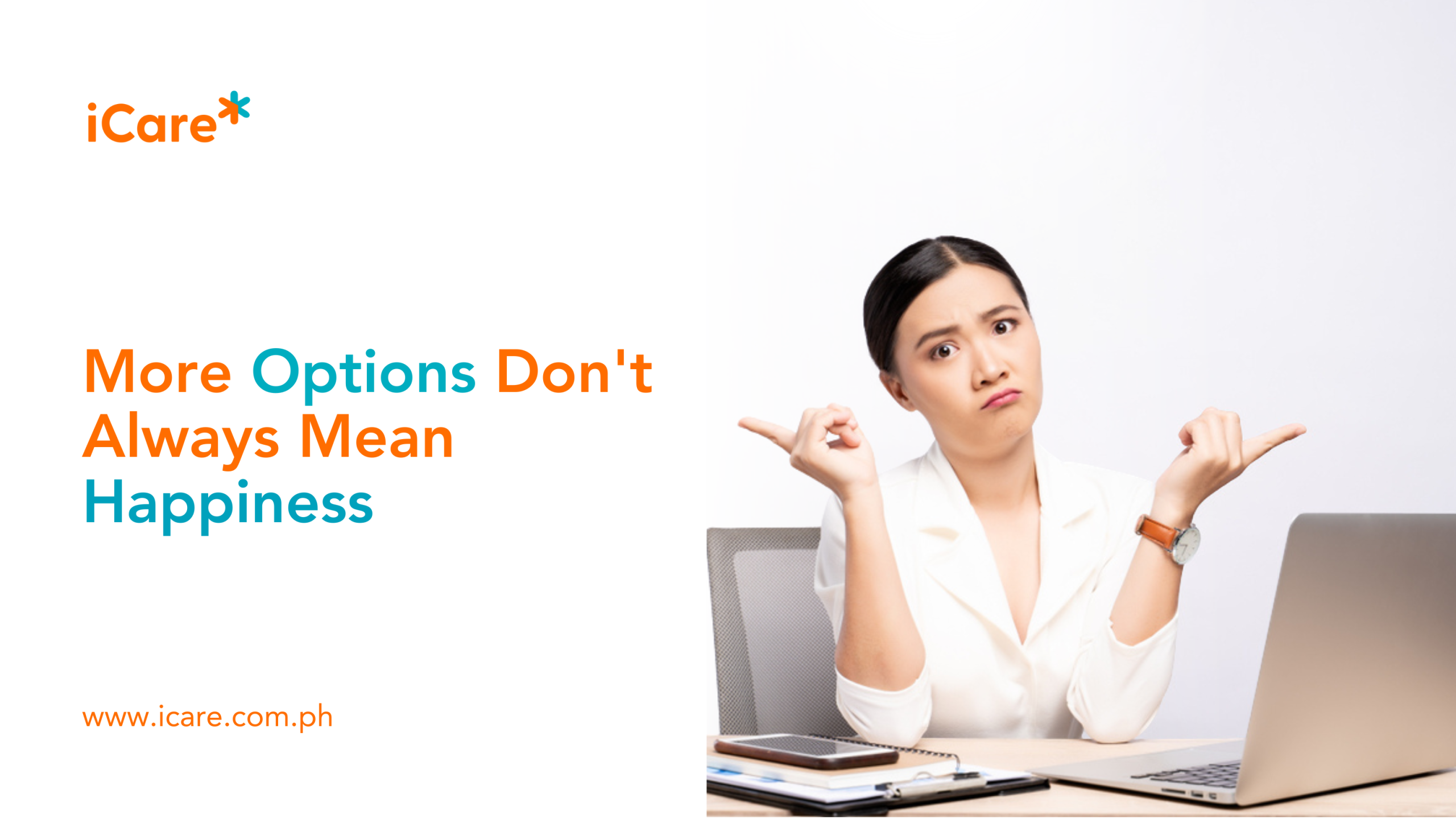
Decision paralysis is different from indecisiveness. It usually occurs when you have several choices that you struggle to decide out of fear that making a choice can be more harmful than doing nothing.
With several options presented, you might be stuck thinking instead of doing it. It leads you to believe that the analysis is productive, too, but the truth is, there is no behavior or action to get it going.
Having many choices usually leads to:
- Decision-fatigue
- Anxiety or avoidance
- Post-choice regret
- Decreased accountability
This can show that being more knowledgeable can be more of a nuisance when it comes to making a decision. On the other hand, preference uncertainty can also trigger choice overload. People who know what they want tend to have a more difficult time when they have fewer options, not more.
Can I Make the Right Decision?
So, the question arises: “Will I ever make the right decision?”
There are some tips you can use to avoid or lessen decision paralysis, such as:
- Simplify small decisions
- Reassure yourself that your choices were made with the best of your knowledge at the time
- Find peace with uncertainty
- Set your standards
When you know what you want, it eliminates the noise of having to constantly choose—something that is widely applicable to almost everything.
Sources and References
Cleveland Clinic. (2026, June 8). How to get past “analysis paralysis.” Health Essentials.
Available at: https://health.clevelandclinic.org/analysis-paralysis
Skowron, C. (2024, May 2). The choice paradox: Why more won’t make you happier. Psychology Today.
Available at: https://www.psychologytoday.com/us/blog/a-different-kind-of-therapy/202405/the-choice-paradox
Adriatico, J. M. E., Cruz, A. D., Tiong, R. C. F., & Racho-Sabugo, C. R. S. (2022). An analysis on the impact of choice overload to consumer decision paralysis. Journal of Economics, Finance and Accounting Studies, 4(1), 55–75.
Available at: https://doi.org/10.32996/jefas.2022.4.1.4
ResearchGate copy: https://www.researchgate.net/publication/357695637_An_Analysis_on_the_Impact_of_Choice_Overload_to_Consumer_Decision_Paralysis
