



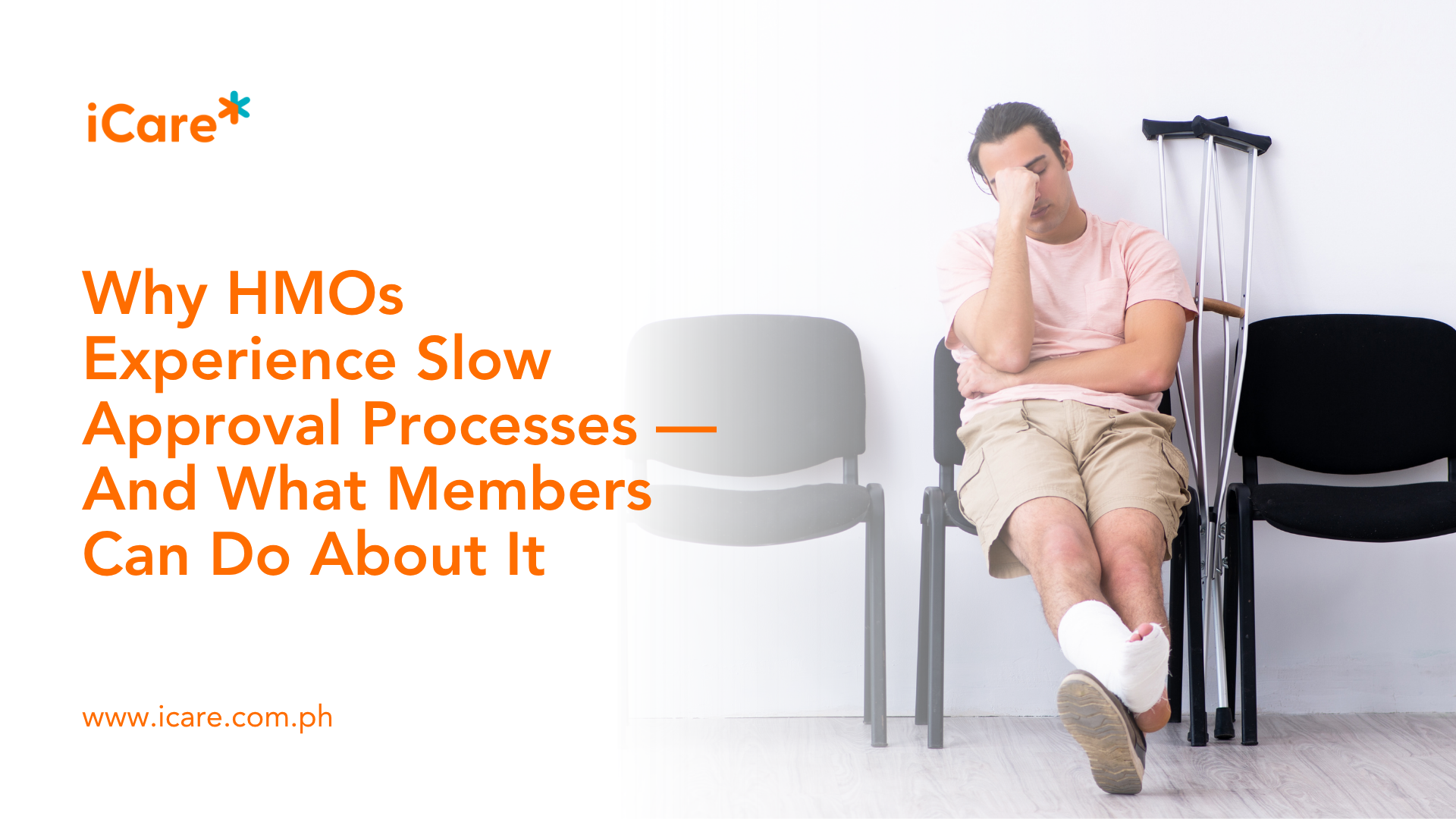
January 13, 2026 Why HMOs Experience Slow Approval Processes — And What Members Can Do About It
Health maintenance organizations (HMOs) often experience slow approval times because multiple verification steps must happen before a request can be cleared. First, the HMO needs to confirm that the member’s coverage is active, that the condition or treatment is included in the plan, and that benefit limits have not been exceeded. This alone can cause delays in insurance processing time, especially during busy periods. Some procedures or tests also require review by an in-house physician, and if the case needs clarification or more medical details, the approval naturally takes longer.
Key Takeaways
- Slow HMO approval times usually occur because of multiple verification steps before a request is cleared. Incomplete documentation can also cause delays.
- With iCare, approval times are faster because you can file your LOA in advance via the iCare Mobile App or by emailing msc@icare.com.ph.
- You can also avail of iCare’s telemedicine service, iCare Telemed7, on Viber. With just a chat, members can connect with a doctor in as fast as seven minutes.
Why Delays in Processing Occur
Delays often occur when documentation is incomplete—such as missing forms, unclear diagnoses, or insufficient doctor notes—which forces clinics or hospitals to resubmit requirements. High volumes of LOA requests, particularly during peak hours or flu season, can overwhelm approval teams and create bottlenecks. Additionally, some HMOs still operate with manual or outdated systems that are not fully integrated with hospitals, slowing down coordination even further.
Sometimes the delay is not on the HMO’s side; hospital staff may take time to encode requests or follow up on approvals. Special cases—such as those involving pre-existing conditions or high-cost procedures—require additional validation, adding another layer to the process. All these factors combined contribute to why HMO approval time in the Philippines can sometimes be slower than expected.
How to Avoid Slow Approval Times
Avoiding slow HMO approvals starts with preparation. Bringing complete requirements—such as clear doctor’s notes, diagnoses, and referrals—prevents one of the most common causes of delays. It also helps to confirm your coverage before visiting a hospital or clinic. Checking whether your plan is active, whether the facility is accredited, and whether the service is covered can save you from unnecessary back-and-forth during approval.
Choosing accredited facilities with integrated HMO systems can speed things up, as these sites process LOAs more efficiently. Timing matters too; approval requests tend to pile up on Monday mornings, late afternoons, and during flu season, so visiting earlier in the day or mid-week can significantly reduce waiting time. For simpler medical concerns, using teleconsultation helps bypass hospital congestion entirely and typically results in faster approvals.
For employees under corporate plans, coordination with HR is essential. Making sure your eligibility details are updated—especially for new hires or dependents—prevents mismatches that lead to denied or delayed LOAs. Keeping your HMO card and ID handy also helps clinic staff encode your information quickly. For scheduled procedures, requesting LOAs in advance through your HMO’s hotline or app can streamline the process. Finally, choosing hospitals or clinics known for efficient HMO coordination can make a noticeable difference in approval speed.
Speed Up Processing Time with iCare
With iCare Philippines, you can avoid slow insurance processing time by being a step ahead. File your LOA in advance via the iCare Mobile App or by emailing msc@icare.com.ph. Prepare complete requirements before going to the HMO desk, as missing documents are one of the leading causes of delays. This includes valid IDs, updated HMO card or e-card, doctor’s request/treatment plan, LOA request form (if required), and previous lab results or medical records (if relevant). Taking photos or screenshots of your HMO card and ID can also help.
You can also ask hospitals for alternatives. Some hospitals can let you start treatment while waiting for approval (especially emergencies), charge you first and reimburse later, or transfer you to a faster HMO-accredited facility if delays persist.
Telemedicine: A Convenient Alternative
Alternatively, you can avail of iCare’s telemedicine service, iCare Telemed7, on Viber. With just a chat, members can connect with a doctor in as fast as seven minutes via https://www.viber.com/insularhealthcare.
Conclusion
Being prepared with all necessary documents and anticipating long hospital queues helps you avoid slow insurance processing times. Choosing a well-connected and competent HMO provider like iCare ensures faster approvals and smoother hospital experiences. With proper planning, slow processing times become a problem of the past.
Frequently Asked Questions
How do I get a Letter of Authorization (LOA)?
Request an LOA via the iCare Mobile App or by emailing msc@icare.com.ph with the following details:
- Name of patient
- Name of facility (clinic or hospital)
- Date of availment
- Name of doctor
When are hospitals/clinics busiest?
HMO desks in hospitals are busiest during:
- 9 AM – 12 NN
- Weekends
- After payday
- During flu season
If possible, schedule appointments early in the morning or on weekdays.
What can I consult about on Telemed7?
Telemed7 is intended for straightforward medical concerns such as colds, minor infections, and routine follow-ups, allowing members to save time and avoid unnecessary hospital visits.
