



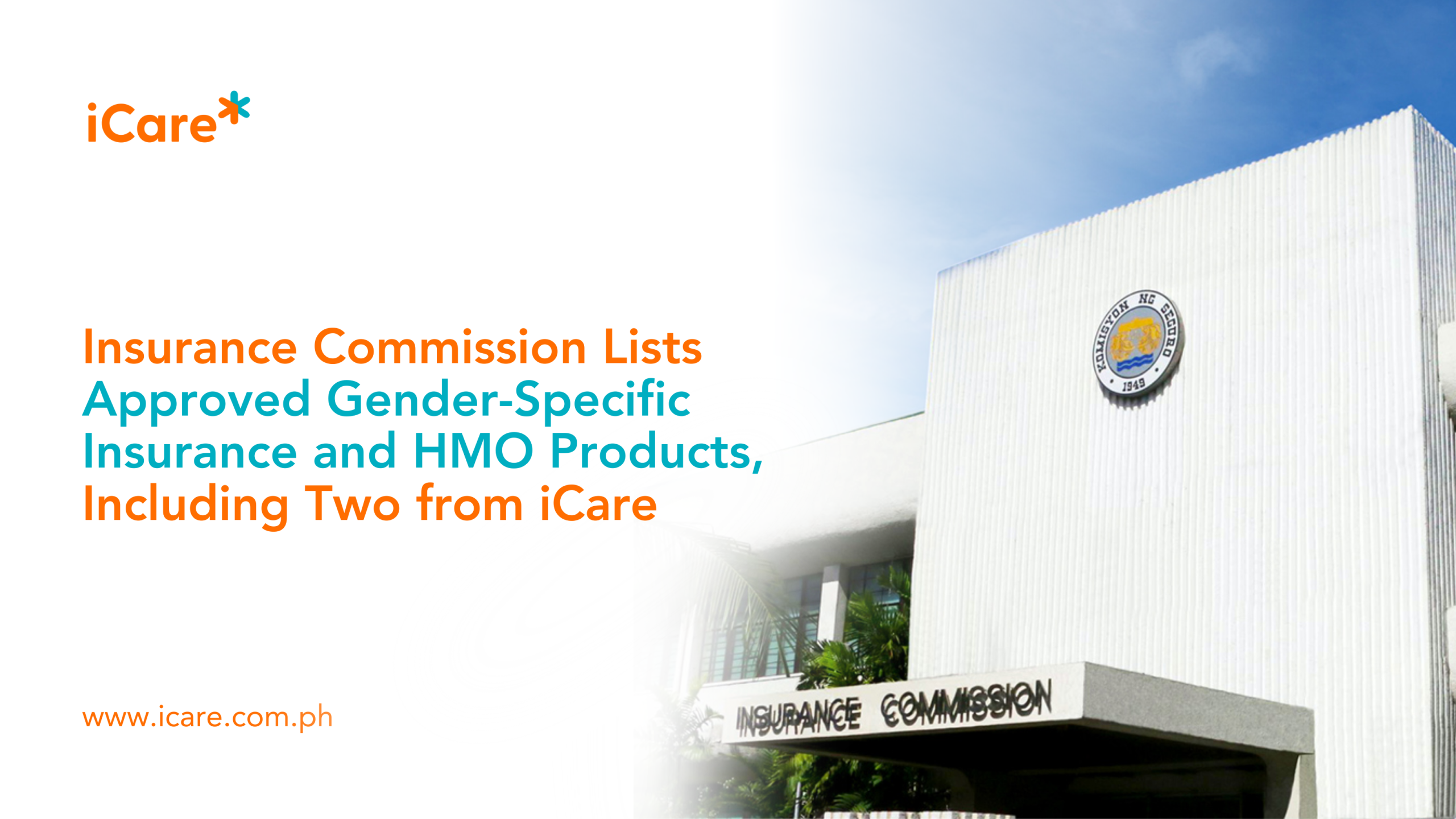
July 28, 2026 Insurance Commission Lists Approved Gender-Specific Insurance and HMO Products, Including Two from iCare
The Insurance Commission’s latest advisory identifies 22 approved gender-specific insurance and HMO products, including two from iCare, reflecting a broader shift toward more inclusive, preventive and personalized healthcare for Filipinos.
For many years, health insurance and HMO products have largely been designed around standardized benefits intended to meet the needs of the general population. While this approach continues to provide an essential foundation for healthcare protection, it does not always recognize that women and men may face different health risks, require different preventive interventions or need specialized care at different stages of life. As healthcare continues to evolve, regulators, insurers and healthcare organizations are increasingly exploring ways to make health protection more responsive to these differences.
This evolving approach was highlighted by the Insurance Commission through Advisory No. RS-2026-007, issued on July 15, 2026, which identifies Insurance Commission-approved gender-specific insurance and HMO products currently available in the Philippine market. The advisory lists 18 life insurance products, two non-life insurance products, and two HMO products that have been developed to address specific health needs of women and men. Among the products included are iCare’s She’s Well and Maternity Care, making iCare the only HMO identified in the advisory with approved gender-specific HMO products.
While the advisory serves as a regulatory reference, its significance extends beyond simply identifying approved products. It reflects a broader recognition that healthcare is becoming increasingly personalized, with benefit design gradually moving away from a one-size-fits-all approach toward solutions that better respond to the realities of people’s health, life stages, and preventive care needs. For consumers, the advisory also provides an opportunity to better understand what gender-sensitive healthcare means and why it is becoming an increasingly important part of modern healthcare.
Healthcare is becoming more personalized
The concept of gender-sensitive healthcare is not about providing preferential treatment to one group over another. Rather, it recognizes that biological differences, reproductive health needs, and even social factors may influence how diseases develop, how people access healthcare and what preventive interventions are most appropriate. As a result, healthcare products that acknowledge these differences can provide more relevant support than plans designed solely around generalized benefits.
The World Health Organization distinguishes between sex and gender, explaining that sex refers to biological characteristics while gender encompasses socially constructed roles, behaviors and relationships that may influence health risks, access to healthcare and health outcomes. Together, these factors contribute to differences in disease patterns, healthcare utilization and preventive care needs throughout a person’s lifetime. As healthcare systems become more evidence-driven, these distinctions are increasingly being considered in the design of health programs and financial protection mechanisms.
This is particularly relevant in preventive healthcare. Conditions such as breast, cervical and ovarian cancers affect women differently, just as prostate conditions affect men. Pregnancy, childbirth and postnatal care likewise require specialized medical support that would not ordinarily form part of a standard health plan. Recognizing these differences does not diminish the importance of comprehensive healthcare for everyone. Instead, it allows healthcare providers to offer more appropriate services where distinct medical needs exist.
The Insurance Commission’s advisory reflects this direction by encouraging insurance companies and HMOs to support gender-sensitive product development using sex-disaggregated data to improve relevance, accuracy, and sustainability. In practical terms, this means that product development should be informed by credible medical evidence and actual healthcare utilization rather than assumptions or broad demographic categories.
Why gender-sensitive healthcare matters
Around the world, healthcare organizations are placing greater emphasis on prevention, early diagnosis and timely intervention. Rather than waiting until illnesses become severe enough to require hospitalization, healthcare systems are increasingly investing in measures that encourage people to seek care earlier, identify health risks sooner and receive appropriate treatment before conditions become more complicated.
The World Health Organization has consistently emphasized the importance of preventive healthcare, particularly in areas such as cervical cancer screening, maternal health and reproductive healthcare. Early detection programs, routine consultations and appropriate health assessments can improve health outcomes while helping individuals make informed decisions about their care. These interventions also support healthier communities by encouraging regular engagement with healthcare providers instead of relying solely on treatment after illness has progressed.
For consumers, this represents an important shift in perspective. Healthcare should not be viewed only as protection against unexpected hospitalization or medical emergencies. It also includes maintaining good health, identifying risks early, and ensuring that individuals receive appropriate care during important stages of life such as pregnancy, motherhood, and healthy aging. Gender-sensitive healthcare supports this broader objective by recognizing that preventive care is not necessarily identical for everyone.
What the advisory means for Filipino consumers
The Insurance Commission’s advisory introduces many consumers to a category of products that they may not have previously considered. While most people are familiar with traditional health insurance and HMOs, fewer may realize that certain products are specifically designed around particular health needs, including women’s health, maternity care and gender-specific illnesses.
The advisory does not suggest that every consumer should purchase a gender-specific product. Rather, it encourages a more informed evaluation of individual healthcare needs. Factors such as age, family history, existing medical conditions, reproductive plans, and current health coverage all influence whether a particular product is appropriate. A young professional may have different healthcare priorities from someone planning to start a family, while an individual already covered by an employer-sponsored health plan may be looking to supplement rather than replace existing benefits.
Consumers should therefore approach these products thoughtfully. Instead of focusing solely on product names or promotional materials, they should review eligibility requirements, covered services, participating hospitals and clinics, exclusions, waiting periods, and the healthcare agreement that governs the product. Understanding these details helps ensure that expectations align with actual coverage and reduces the likelihood of misunderstanding when benefits are eventually used.
iCare’s inclusion reflects a broader commitment to inclusive healthcare
Among the products identified in the Insurance Commission’s advisory are iCare’s She’s Well and Maternity Care. Their inclusion is significant not simply because they appear on the regulator’s list, but because they illustrate a broader movement toward healthcare solutions that recognize different health needs across various stages of life.
Over the past several years, iCare has expanded its focus beyond traditional hospitalization benefits by investing in preventive healthcare, digital health services, telemedicine, mental wellness initiatives and programs that encourage earlier access to medical care. Gender-sensitive healthcare naturally complements these efforts because it recognizes that improving health outcomes often requires more than providing identical benefits to every member. It also requires understanding where health risks differ and designing services that respond appropriately to those differences.
This direction is consistent with iCare’s broader philosophy of combining Singaporean healthcare expertise with compassionate Filipino care. Rather than treating gender-sensitive healthcare as a niche offering, the company views it as part of a larger commitment to making healthcare more accessible, relevant and responsive to the diverse needs of Filipino individuals and families. As healthcare continues to evolve, inclusion increasingly means recognizing differences where they matter medically while ensuring that quality care remains accessible to everyone.
Looking ahead
The Insurance Commission’s latest advisory demonstrates that healthcare innovation is no longer limited to digital platforms or new medical technologies. It also extends to the way health protection is designed. Products that recognize different health needs across populations represent an important step toward a healthcare system that is more responsive to the realities of people’s lives.
For Filipino consumers, the growing availability of gender-sensitive healthcare products offers additional options for protecting their health, but it also underscores the importance of making informed decisions. The most appropriate healthcare product is not necessarily the one with the broadest list of benefits, but the one that best matches an individual’s health needs, life stage and existing coverage.
The advisory also signals an encouraging direction for the Philippine healthcare sector. As regulators, insurers, HMOs and healthcare providers continue to place greater emphasis on prevention, inclusion and evidence-based product design, consumers can expect healthcare solutions to become increasingly personalized without losing sight of the broader goal of expanding access to quality care.
For iCare, inclusion in the Insurance Commission’s list is less about two specific products than about participating in a wider movement toward more inclusive healthcare. By supporting preventive care, promoting healthcare accessibility and recognizing that different people may require different forms of support throughout their lives, the company reflects an approach that is becoming increasingly relevant as the Philippine healthcare landscape continues to evolve.
Sources and References
Insurance Commission of the Philippines. Advisory No. RS-2026-007: IC-Approved Gender-Specific Insurance and HMO Products. July 15, 2026.
World Health Organization. Gender and Health. https://www.who.int/health-topics/gender
World Health Organization. Screening for Cervical Cancer. https://www.who.int/activities/screening-for-cervical-cancer
World Health Organization. Maternal Health. https://www.who.int/health-topics/maternal-health
Republic Act No. 9710. Magna Carta of Women. https://lawphil.net/statutes/repacts/ra2009/ra_9710_2009.html
Republic Act No. 10354. Responsible Parenthood and Reproductive Health Act of 2012. https://lawphil.net/statutes/repacts/ra2012/ra_10354_2012.html
