October 8, 2026 Rising Healthcare Costs Put Employer Benefits in Focus at IBPAP–TP Forum
TAGUIG CITY, Philippines – Rising medical costs are putting pressure on employers across industries to sustain healthcare benefits, particularly in the Philippine IT-BPM sector, where a large workforce makes affordable and accessible care a business priority.
The challenge took center stage at the IBPAP-TP in the Philippines C-Suite Forum, “Scaling HMO Growth: AI-Driven Operations and Seamless Member Experiences,” where industry leaders examined how health maintenance organizations (HMOs) can help employers manage costs, improve employee experiences and strengthen healthcare delivery through technology and provider partnerships.
For iCare Chief Commercial Officer Atty. Gideon V. Peña, whose company has expanded from approximately 35,000 members to around 1.5 million covered lives, growth requires a fundamental shift in how HMOs operate.
“The real measure of growth is whether healthcare becomes simpler as you get bigger,” Peña told the forum.
Managing Medical Inflation
Celeste Ilagan, President and CEO-designate of the IT and Business Process Association of the Philippines (IBPAP), opened the forum by highlighting the importance of HMOs to the IT-BPM workforce. Dipto Sen, Chief Financial Officer of TP in the Philippines, discussed the potential of artificial intelligence to help HMOs scale while improving member experiences.
AON Chief Actuary and Head of Data Analytics Todd Dore examined medical inflation and changing HMO market conditions, explaining how claims analytics, risk assessment and AI-driven forecasting can help employers identify cost drivers, anticipate claims and make more informed decisions about healthcare benefits.
Marick Miraflor, Vice President for Healthcare Operations at TP, discussed how technology and human expertise can improve service delivery, emphasizing workforce capability, oversight and shared accountability among employers, HMOs and healthcare providers.
Scaling Healthcare Without Adding Complexity
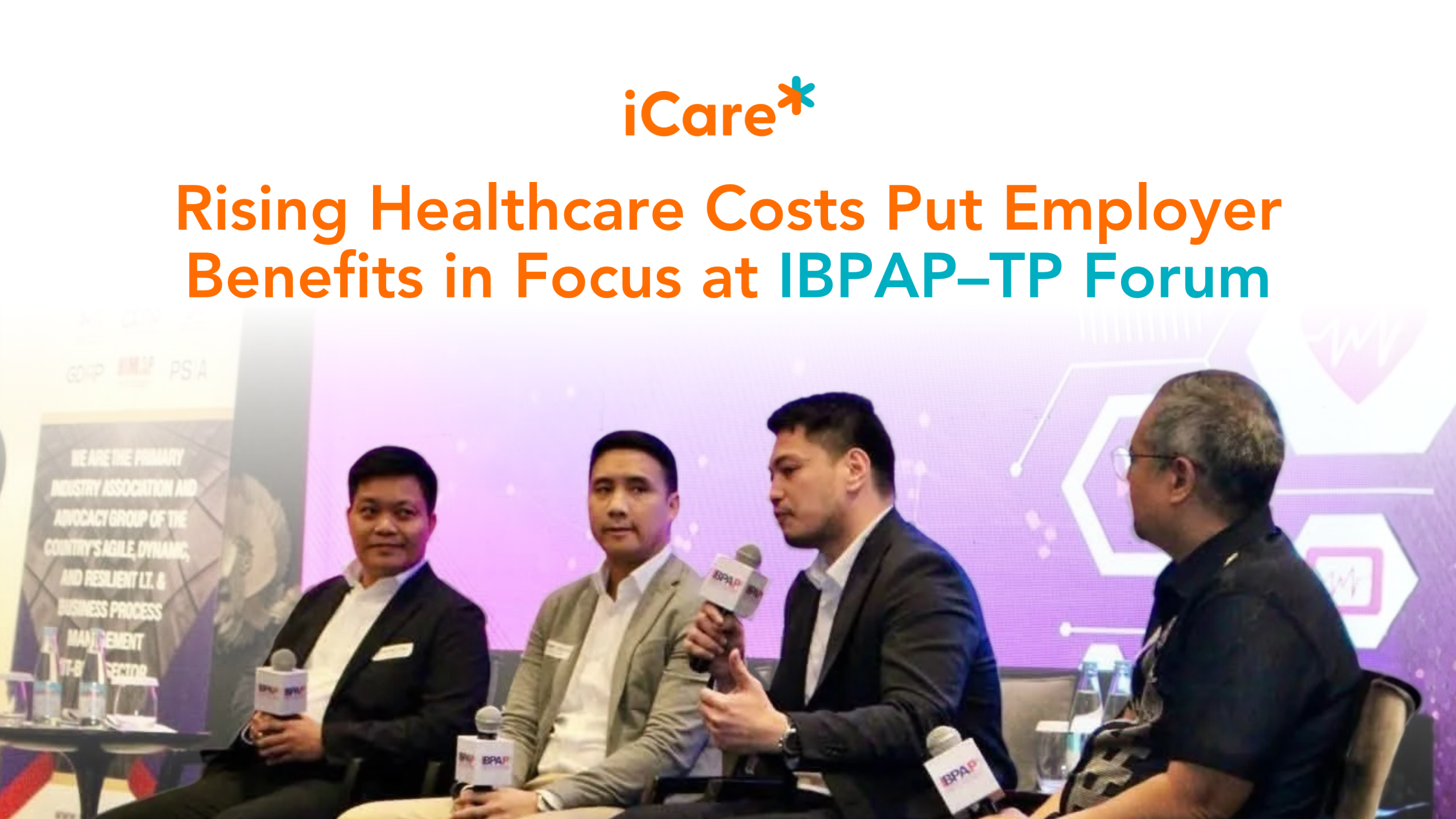
The panel featured Patrick Lopez, Head of ANZ and Domestic Operations at TP; Peña of iCare HMO; Jerome A. Sebastian, Senior Assistant Vice President and Deputy Head of Sales and Marketing at Intellicare; and Edwin Magsino, Chief Operating Officer of Healthway Multi-Specialty Centers. Inkee Hidalgo, Vice President for Learning and Development at TP, moderated the discussion.
Panelists explored how automation can accelerate eligibility verification and letters of authorization, reduce waiting times and improve digital access to healthcare. They also discussed preventive care and workplace-based services as ways to support employee health while managing costs.
Peña cited the rapid expansion of the HMO industry and iCare’s growth as reasons to rethink traditional operating models. “The Philippine HMO industry is growing at nearly 20% a year. And within that fast-growing market, iCare has moved from No. 12 in 2018 to No. 3 today,” he said.
“You cannot simply add people every time you add members. You need technology, automation, data and stronger healthcare partnerships to absorb that scale.” As membership grows, HMOs must process more claims, authorizations and member inquiries. Automating routine transactions can improve efficiency while allowing healthcare professionals and customer service teams to focus on cases requiring human intervention.
Technology With Human Accountability
The panel also emphasized that greater automation must not come at the expense of human judgment.
In healthcare, AI can make a decision in seconds. But if that decision affects someone’s health, who answers for it?” Peña asked. He emphasized the need to balance technology with human responsibility, allowing automated systems to handle repetitive tasks while people retain responsibility for judgment, empathy and decisions affecting care.
“Automate the process, but never automate accountability,” he said.
For HMOs, this requires appropriate oversight, clear decision-making protocols and safeguards for sensitive health information, particularly when technology is used in claims processing and healthcare authorizations.
A Business Priority Beyond Coverage
The discussion underscored the growing importance of HMOs as partners in workforce management. For employers, sustainable healthcare benefits increasingly depend on service reliability, provider accessibility, preventive care and efficient administration, not simply premiums and coverage limits.
These considerations are especially relevant to the IT-BPM industry, where large workforces and varied operating schedules require dependable healthcare services. IBPAP’s July 2026 industry outlook projected that the sector could employ between 1.85 million and 2.14 million people by 2028.
The forum concluded with remarks from Rahul Jolly, Chief Executive Officer of TP in the Philippines, who encouraged continued collaboration on technology and operational improvements in healthcare.
As medical costs rise, employers will increasingly rely on HMOs to help balance financial sustainability with employee welfare. The industry’s challenge is to translate growth and technological innovation into healthcare that is more accessible, efficient and dependable for the people who need it.
Sources and References:
IT and Business Process Association of the Philippines (IBPAP). (2026, July). 2028 Industry Outlook. https://www.ibpap.org/news-room/43
- (n.d.). Insurance digital transformation and customer experience. https://www.tp.com/en-us/industries/insurance/
- (2026, July). Everest Group designates TP as a leader in healthcare CXM as AI redefines customer experience. https://www.tp.com/en-us/insights-list/press-releases/everest-group-designates-tp-as-a-leader-in-healthcare-cxm-as-ai-redefines-customer-experience/
