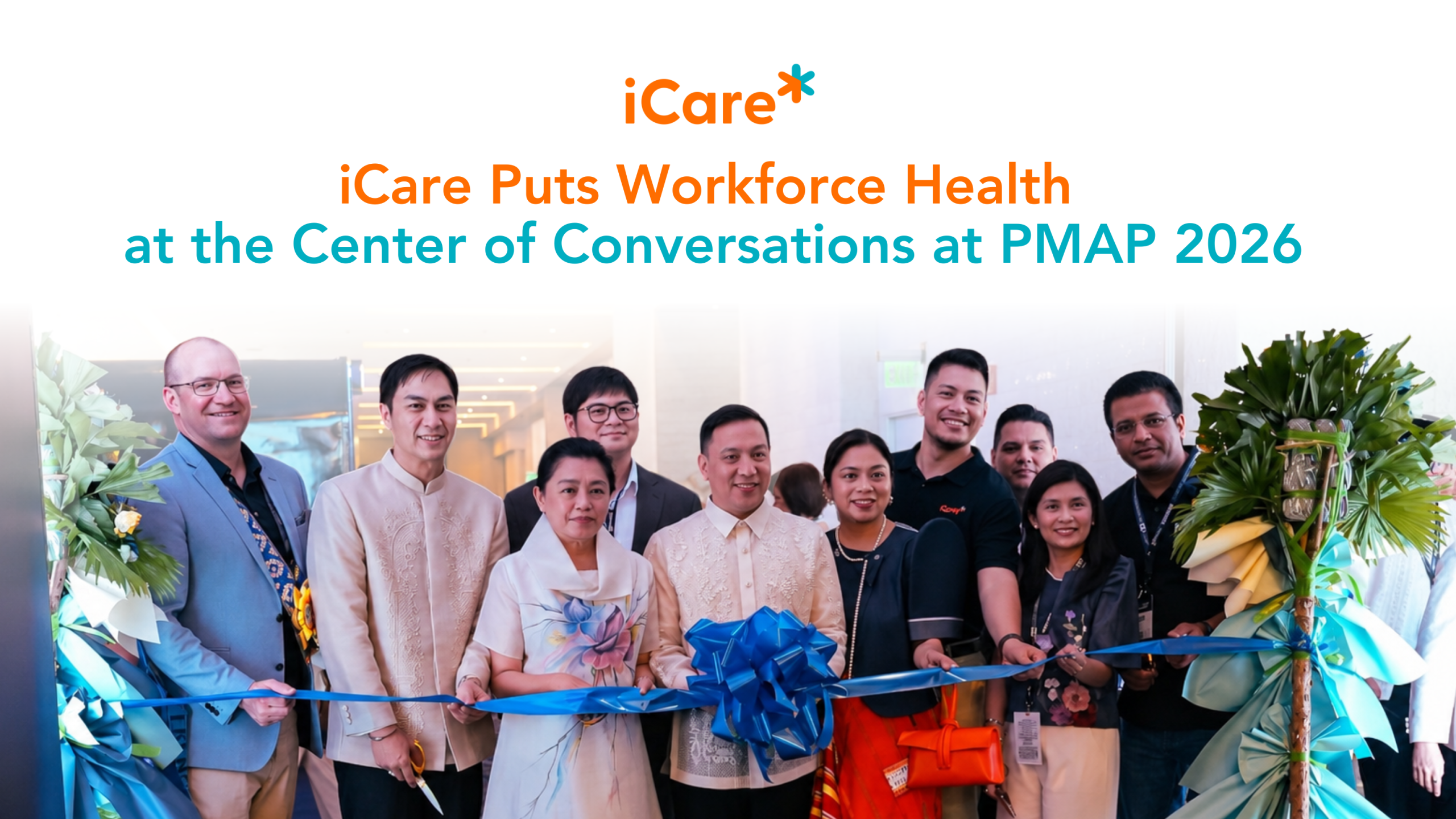
November 3, 2026 iCare Puts Workforce Health at the Center of Conversations at PMAP 2026
PASAY CITY, Philippines — As artificial intelligence and automation transform the workplace, Philippine employers are confronting another question about the future of their organizations: how to build and sustain a healthy workforce.
The issue figured prominently in iCare’s participation at the 63rd Annual Conference of the People Management Association of the Philippines (PMAP), held from October 21 to 23, 2026, at the Marriott Grand Ballroom in Pasay City. Marking the association’s 70th anniversary, the gathering brought together human resources professionals, business executives, and industry leaders under the theme “Powering the Next HR Shift,” with discussions examining the changing relationship between people, technology, and organizational performance.
As one of the conference’s major corporate partners, iCare brought healthcare into a conversation traditionally dominated by talent management, leadership, and workplace transformation. Its participation reflected a growing recognition among employers that healthcare is more than a component of compensation. It is an investment in employees’ wellbeing and an increasingly important consideration in workforce planning, business continuity, and long-term growth.
The Business of Workforce Health
The scale of the Philippine healthcare industry illustrates its significance to employers and the wider economy. According to the Insurance Commission, health maintenance organizations generated approximately PHP 47.03 billion in revenues during the first half of 2025, an increase of 21.36 percent from the same period a year earlier. Healthcare benefits and claims reached PHP 36.29 billion, up 19.63 percent, reflecting the substantial financial resources flowing through the country’s managed healthcare system.
For employers, these figures provide context for an important shift in how healthcare benefits are evaluated. Beyond premiums and coverage limits, companies are increasingly considering how medical services support employee wellbeing, encourage preventive care, and contribute to the continuity of their operations. The objective is to develop healthcare arrangements that serve employees throughout their working lives while remaining financially sustainable.
The approach recognizes that workforce health is influenced by more than the availability of medical coverage. Employees have different healthcare needs depending on their age, occupation, family circumstances, and individual health conditions. Employers, meanwhile, must account for varying working arrangements, geographic locations, and organizational requirements when developing benefits programs.
These considerations were the focus of a sponsor-led concurrent learning session on October 22, titled “If the Shoe Fits,” under the broader theme “The Future of Workforce Health.” Led by iCare Chief Commercial Officer Atty. Gideon V. Peña, the session explored the importance of aligning healthcare benefits with employees’ needs while emphasizing prevention, accessibility, and sustainable healthcare management.
The discussion offered a perspective on the evolving relationship between employers and healthcare organizations. As businesses place greater emphasis on employee wellbeing, HMOs have an opportunity to contribute through preventive health initiatives, service innovation, and healthcare programs designed around the needs of different workforces.
Beyond Physical Health
The growing attention to workforce wellbeing has also brought mental health into sharper focus. Employers are increasingly considering how psychological support, counseling, and employee assistance services can complement traditional medical benefits.
The World Health Organization estimates that depression and anxiety account for approximately 12 billion lost working days globally each year, with an estimated economic cost of USD 1 trillion in lost productivity. The figures underscore the importance of mental health in discussions about employment, organizational performance, and the wellbeing of working populations. This broader perspective was reflected in the participation of TELUS Health, iCare’s mental health and Employee Assistance Program (EAP) partner, which likewise supported PMAP 2026 as a sponsor. Its presence highlighted the expanding role of specialized mental health services within corporate healthcare programs.
Employee assistance programs provide access to professional support for employees navigating personal concerns, emotional challenges, and work-related pressures. Alongside conventional medical coverage, these services offer organizations additional ways to promote wellbeing and create supportive working environments.
The collaboration between iCare and TELUS Health illustrates how physical healthcare and psychological support can form part of a more comprehensive employee benefits strategy. It also reflects the growing recognition that workforce health encompasses both medical needs and the broader circumstances affecting employees’ lives.
Technology and the Changing Experience of Care
Digital innovation is another development influencing corporate healthcare. As companies adopt more flexible working arrangements and operate across different locations, technology is creating additional ways for employees and their families to obtain medical advice and services.
For iCare, these developments are reflected in a healthcare model that combines an established network of accredited hospitals, clinics, and medical professionals with digital consultation services. Founded in 1991, the company provides HMO coverage to businesses, individuals, and families, serving a range of healthcare needs through traditional and technology-enabled channels.
Among its digital initiatives is Telemed7, a service designed to connect members with general practitioners within a target response time of seven minutes. By providing an additional option for medical consultations, the service complements in-person healthcare and offers greater convenience to members managing professional and family responsibilities.
Such innovations are helping expand the ways healthcare services can be delivered. Digital consultations can support timely medical advice, while established hospital and clinic networks remain essential for diagnostic procedures, specialist treatment, and other forms of in-person care.
Preventive healthcare is also becoming a more prominent part of corporate health planning. Health education, appropriate screening, early consultations, and chronic disease management can help employees take a more active role in maintaining their health. Together, these approaches reflect a gradual shift toward healthcare programs that support wellbeing throughout the year, rather than focusing primarily on treatment during illness.
For employers, the combination of physical healthcare networks, digital services, and preventive initiatives provides a broader range of options for supporting employees across different industries and working environments.
A Celebration of People and Care
iCare’s participation at PMAP 2026 extended beyond the conference’s learning sessions. During the October 22 awards ceremony, Filipino singer Sam Concepcion performed “Give Me Your Yes,” an original song associated with iCare, along with “Mahal na Mahal” and “Dati.”
The performance brought a musical dimension to an evening honoring achievements in people management and organizational excellence. It also complemented the conference’s emphasis on the human relationships that sustain workplaces, including the importance of care, trust, and support.
For iCare, the performance connected its brand’s message with the broader purpose of the gathering. While the conference examined the future of human resources through discussions on leadership, technology, and organizational change, the awards ceremony recognized the people and institutions contributing to the development of the Philippine workforce.
The occasion also illustrated how healthcare, employee engagement, and corporate culture increasingly intersect. As organizations seek to strengthen their relationships with employees, wellbeing is becoming part of a wider conversation about how businesses recognize and support the people behind their success.
Healthcare in the Next HR Shift
The 63rd PMAP Annual Conference reflected the expanding role of human resources in shaping business strategy. As organizations respond to technological advances and changing workforce expectations, employee wellbeing is becoming more closely connected with decisions about talent, productivity, and organizational development.
Healthcare is an important part of that evolution. Its growing relevance requires collaboration among human resources professionals, corporate leadership, finance executives, and healthcare providers, each contributing to the development of benefits that support employees and the organizations they serve.
For iCare, participation in PMAP 2026 provided an opportunity to engage with the country’s HR community on these priorities. Through its learning session on workforce health, its partnership with TELUS Health, and its presence at the conference’s awards ceremony, the company highlighted different dimensions of its commitment to “Say Yes to Better Health.”
The conference’s central theme, “Powering the Next HR Shift,” pointed toward a future in which organizations will be measured not only by how effectively they adopt new technologies or develop talent, but also by how they support the wellbeing of their people.
As Philippine businesses prepare for that future, healthcare is becoming an increasingly important part of the conversation. For employers, the opportunity lies in making workforce health a deliberate and enduring part of organizational strategy, recognizing that the success of any workplace transformation ultimately depends on the people expected to carry it forward.
