

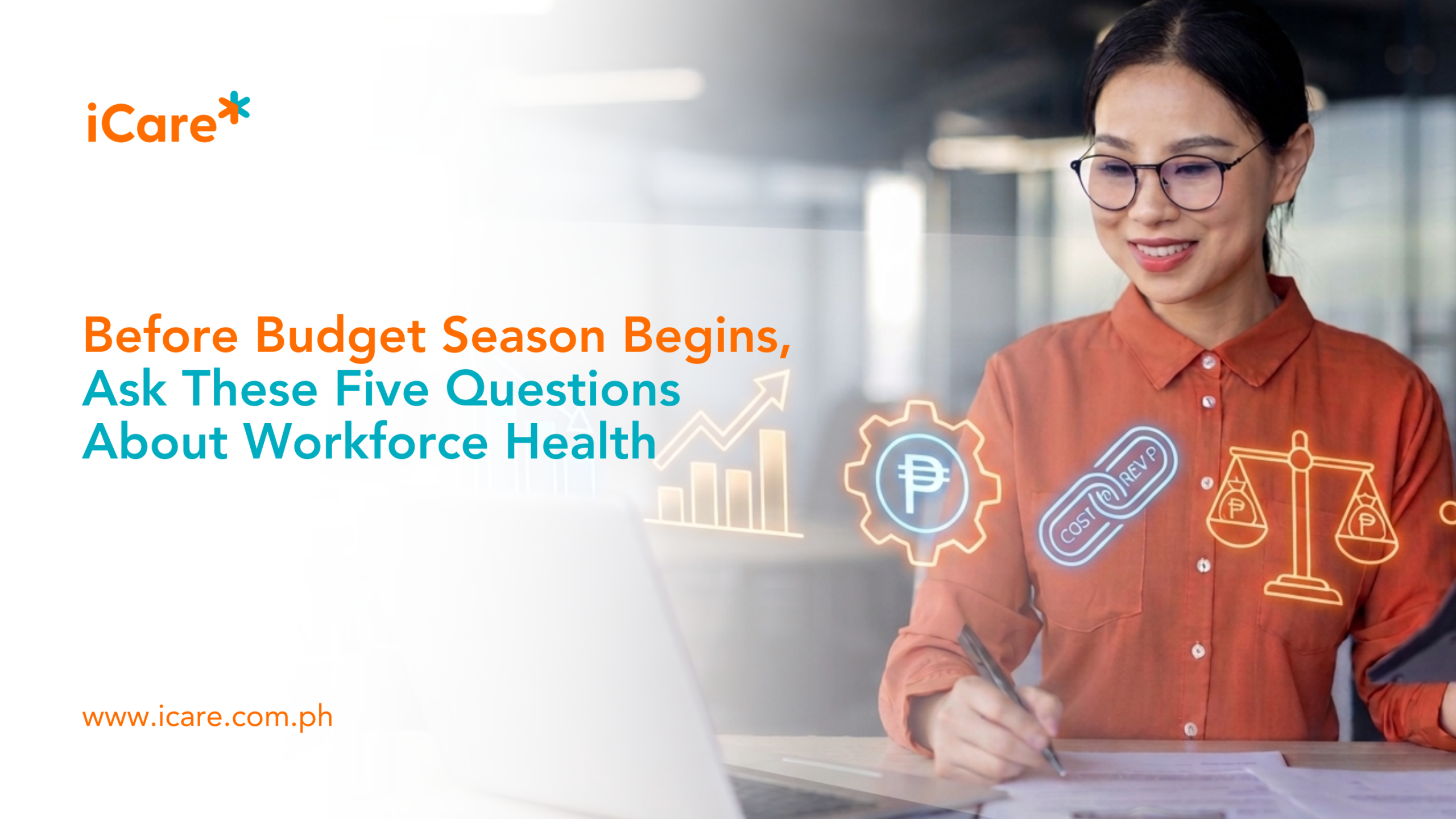
June 17, 2026 Before Budget Season Begins, Ask These Five Questions About Workforce Health
As organizations enter the second half of the year, leadership teams are beginning a familiar exercise. Financial forecasts are being updated, growth targets reassessed, and assumptions for the coming year gradually taking shape.
Yet one of the most significant drivers of future business performance often receives less scrutiny than revenue projections, technology investments, or expansion plans: workforce health.
For many organizations, discussions about employee health remain confined to annual HMO renewals, benefits negotiations, or claims reviews. Increasingly, however, that approach is proving inadequate. Rising medical inflation, changing employee expectations, growing mental health concerns, and ongoing competition for talent are transforming workforce health from an HR concern into a strategic business issue.
Recent research by WTW identified the Philippines as one of the markets facing the highest healthcare cost increases in the Asia-Pacific region, highlighting the continuing challenge of medical inflation for employers. Although annual projections vary, the broader trend remains clear: healthcare costs continue to place significant pressure on employer budgets, prompting many organizations to reassess traditional approaches to workforce health and benefits management.
The Philippine context makes these questions particularly relevant. The country continues to benefit from a relatively young workforce compared with many developed economies, helping support one of Southeast Asia’s most dynamic labor markets. The Philippines also remains one of the world’s leading destinations for information technology and business process management services, with the sector serving as a major contributor to employment and economic growth. Yet demographic advantages do not make organizations immune from health risks.
According to the World Health Organization, noncommunicable diseases such as cardiovascular disease, cancer, diabetes, and chronic respiratory illnesses account for the majority of deaths in the Philippines. Combined with increasingly sedentary work environments, rising stress levels, and evolving employee expectations around wellbeing, these trends are prompting employers to view workforce health not merely as an employee benefit issue, but as a strategic business imperative.
Against this backdrop, leading organizations are asking a different set of questions. Rather than focusing solely on next year’s healthcare budget, they are examining how workforce health affects productivity, resilience, employee experience, and long-term business performance.
Before budget season begins in earnest, business leaders should consider five questions.
Are We Managing Healthcare Costs or Merely Budgeting for Them?
Medical inflation has fundamentally changed the relationship between employers and their healthcare providers.
Historically, many organizations viewed healthcare as an annual procurement exercise. Benefits were renewed, premiums were negotiated, and discussions resumed the following year. That approach is becoming increasingly difficult to sustain in an environment where healthcare costs continue to rise and workforce health challenges are becoming more complex.
Increasingly, employers are looking beyond financing and reimbursement. They are seeking healthcare partners that can help them understand utilization patterns, identify emerging risks, support preventive interventions, and manage healthcare costs proactively rather than reactively.
Annual utilization reports may show increases in hospital admissions, specialist consultations, or high-cost claims. However, these figures often represent symptoms rather than causes. The more important question is whether underlying health risks are emerging within the workforce and whether the organization has a strategy to address them.
According to the World Health Organization, noncommunicable diseases account for approximately 74 percent of deaths worldwide. Conditions such as diabetes, hypertension, cardiovascular disease, and certain forms of cancer continue to impose significant health and economic burdens across countries and industries.
For employers, understanding the factors that influence workforce health can support more informed decisions around benefits, workplace wellbeing, risk management, and long-term financial planning. The objective should not simply be to absorb higher healthcare costs each year, but to understand how those costs connect to broader workforce outcomes.
This is where data is becoming increasingly important. Across the healthcare industry, employers are seeking more timely and actionable insights into utilization patterns, emerging health risks, and cost drivers. At iCare, investments in healthcare analytics capabilities, including a dedicated Data Analytics Team and specialized reporting platforms, are helping provide employers with timely utilization reports and population health insights.
The objective is not merely to report claims activity after the fact. It is to help employers make better decisions before utilization trends become budget challenges. By identifying patterns early and supporting targeted interventions, healthcare providers can play a meaningful role in helping organizations manage medical inflation and improve workforce health outcomes.
Is Workforce Health Reflected in Our Business Strategy?
Many organizations recognize the importance of workforce health. Fewer integrate it into business planning and decision-making.
Historically, employee health has often been viewed as an HR responsibility. Today, however, workforce health increasingly influences issues that concern executive leadership, including productivity, workforce resilience, employee engagement, operational continuity, and organizational performance.
This shift is prompting leading employers to move beyond viewing health programs as standalone initiatives. Instead, they are considering how workforce wellbeing supports broader strategic objectives, from sustaining growth and improving customer experience to attracting talent and managing risk.
Organizations that align workforce health with business strategy are often better positioned to anticipate challenges, adapt to changing workforce expectations, and support sustainable performance over the long term.
Are We Creating a Workplace That Supports Long-Term Wellbeing?
Workplace health is influenced by far more than access to medical care.
The design of work, organizational culture, leadership practices, workload expectations, and access to support systems all shape employee wellbeing. As workforce expectations evolve, employees increasingly place value on workplaces that support physical, mental, and emotional health.
This is particularly relevant in industries characterized by high-pressure environments, demanding schedules, and intense competition for talent. Employers are increasingly recognizing that wellbeing is not solely a healthcare issue. It is a workplace issue.
Supporting long-term wellbeing may involve initiatives ranging from mental health support and health education to flexible work arrangements, preventive health programs, and greater access to healthcare resources. The specific approach will vary by organization, but the underlying principle remains the same: healthier workplaces are often more resilient workplaces.
Across the healthcare industry, innovations such as telemedicine, digital health platforms, preventive care programs, and population health management initiatives are helping organizations expand access to care and support employee wellbeing in more convenient and scalable ways.
Are Health Issues Affecting Productivity More Than We Realize?
Many organizations measure absenteeism. Far fewer measure the broader productivity impact of health-related challenges.
Research published in BMC Public Health found that presenteeism, where employees remain at work despite health conditions that reduce their effectiveness, can impose productivity costs that are often comparable to or even greater than absenteeism. Unlike absenteeism, presenteeism is difficult to detect because employees remain physically present while operating below their full capacity.
Mental health presents a particularly important consideration. According to the World Health Organization, depression and anxiety contribute to the loss of approximately 12 billion working days globally each year, resulting in an estimated USD1 trillion in lost productivity. These challenges affect more than healthcare budgets. They influence employee engagement, retention, customer experience, innovation, collaboration, and organizational resilience.
For CEOs and CHROs, workforce health metrics increasingly deserve consideration alongside traditional business indicators such as turnover, engagement, recruitment outcomes, and operational performance.
The most significant workforce health costs may not appear in claims reports. They often appear in productivity data, employee surveys, and organizational performance indicators.
If Medical Inflation Remains High, What Is Our Long-Term Plan?
Healthcare costs are expected to remain under pressure for the foreseeable future.
In response, many organizations continue to focus primarily on annual negotiations, budget adjustments, and short-term cost containment measures. While these approaches may provide temporary relief, they do not always address underlying workforce health challenges or long-term sustainability.
Increasingly, leading employers are adopting a broader perspective.
Rather than treating healthcare solely as a procurement exercise, they are investing in workforce health strategies that support prevention, early intervention, chronic disease management, mental wellbeing, health literacy, and healthcare accessibility.
A growing number of employers are also rethinking what they expect from their HMO or healthcare provider. Rather than viewing healthcare providers solely as administrators of benefits, many organizations are seeking strategic partners that can help them navigate rising healthcare costs, interpret utilization data, and develop long-term workforce health strategies.
At iCare, this approach has produced encouraging results across several large employer accounts. Through ongoing utilization reviews, data-driven interventions, and collaborative workforce health planning, some clients have achieved renewal outcomes that remained below prevailing medical inflation trends. In certain cases, employers have even maintained flat renewal rates despite broader industry cost pressures.
While every organization’s experience is different and outcomes depend on multiple factors, these examples illustrate an important point. Managing healthcare costs is no longer solely about negotiating annual renewals. Increasingly, it is about creating a year-round partnership focused on workforce health, risk management, and long-term sustainability.
Across industries, employers are discovering that workforce health influences far more than medical claims. It affects productivity, employee experience, retention, organizational resilience, and ultimately business performance.
The question is no longer whether organisations can afford to invest in workforce health. Increasingly, the question is how they can do so in a way that creates lasting value for both employees and the business.
A Boardroom Issue, Not Just an HR Issue
Workforce health is steadily moving from the HR department to the boardroom.
Investors are paying greater attention to human capital management. Employees are placing increasing value on wellbeing and support. Regulators and policymakers continue to emphasize workplace health and mental wellbeing. Meanwhile, employers face mounting pressure to remain competitive in a rapidly evolving labor market.
These developments are converging around a simple reality: workforce health is becoming a strategic business asset.
As organizations begin planning for the future, healthcare should not be viewed solely as a line item to manage. It should be considered a contributor to workforce capability, organizational resilience, and long-term competitiveness.
Before budget season begins, leaders should ask whether they truly understand the health of their workforce and the implications it carries for the business.
In an environment of persistent medical inflation and increasing workforce expectations, organizations can no longer afford to manage healthcare reactively. The most successful employers will be those that combine financial discipline with a proactive approach to workforce health, supported by timely data, meaningful insights, and trusted healthcare partners.
Ultimately, the goal is not simply to spend more or spend less on healthcare. It is to make better decisions, achieve sustainable outcomes, and ensure that healthcare investments continue to support both business performance and employee wellbeing in the years ahead.
Sources and References
World Health Organization. Noncommunicable Diseases Fact Sheet (Updated 2023). Available at: https://www.who.int/news-room/fact-sheets/detail/noncommunicable-diseases
World Health Organization. Mental Health at Work Fact Sheet (Updated 2024). Available at: https://www.who.int/news-room/fact-sheets/detail/mental-health-at-work
World Health Organization Philippines. Country Overview: Philippines. Available at: https://www.who.int/philippines
WTW. Philippines Healthcare Benefit Costs Projected to Continue Its Double-Digit Increase in 2025 (6 January 2025). Available at: https://www.wtwco.com/en-ph/news/2024/11/philippines-healthcare-benefit-costs-projected-to-continue-its-double-digit-increase-in-2025
Cancelliere, C., Cassidy, J.D., Ammendolia, C., and Côté, P. Are Workplace Health Promotion Programs Effective at Improving Presenteeism in Workers? A Systematic Review. BMC Public Health, Vol. 11, Article 395 (2011). Available at: https://bmcpublichealth.biomedcentral.com/articles/10.1186/1471-2458-11-395
International Labour Organization. Safety and Health at Work. Available at: https://www.ilo.org/global/topics/safety-and-health-at-work
Philippine Statistics Authority. Labor Force Survey. Available at: https://psa.gov.ph/statistics/labor-force-survey
IT and Business Process Association of the Philippines. Industry Statistics. Available at: https://www.ibpap.org/industry-statistics
World Bank. Population Ages 15–64 (% of Total Population) – Philippines. Available at: https://data.worldbank.org/indicator/SP.POP.1564.TO.ZS?locations=PH
