

June 24, 2026 Regulators Cite Strong Financial System but Warn Against Growing Vulnerabilities
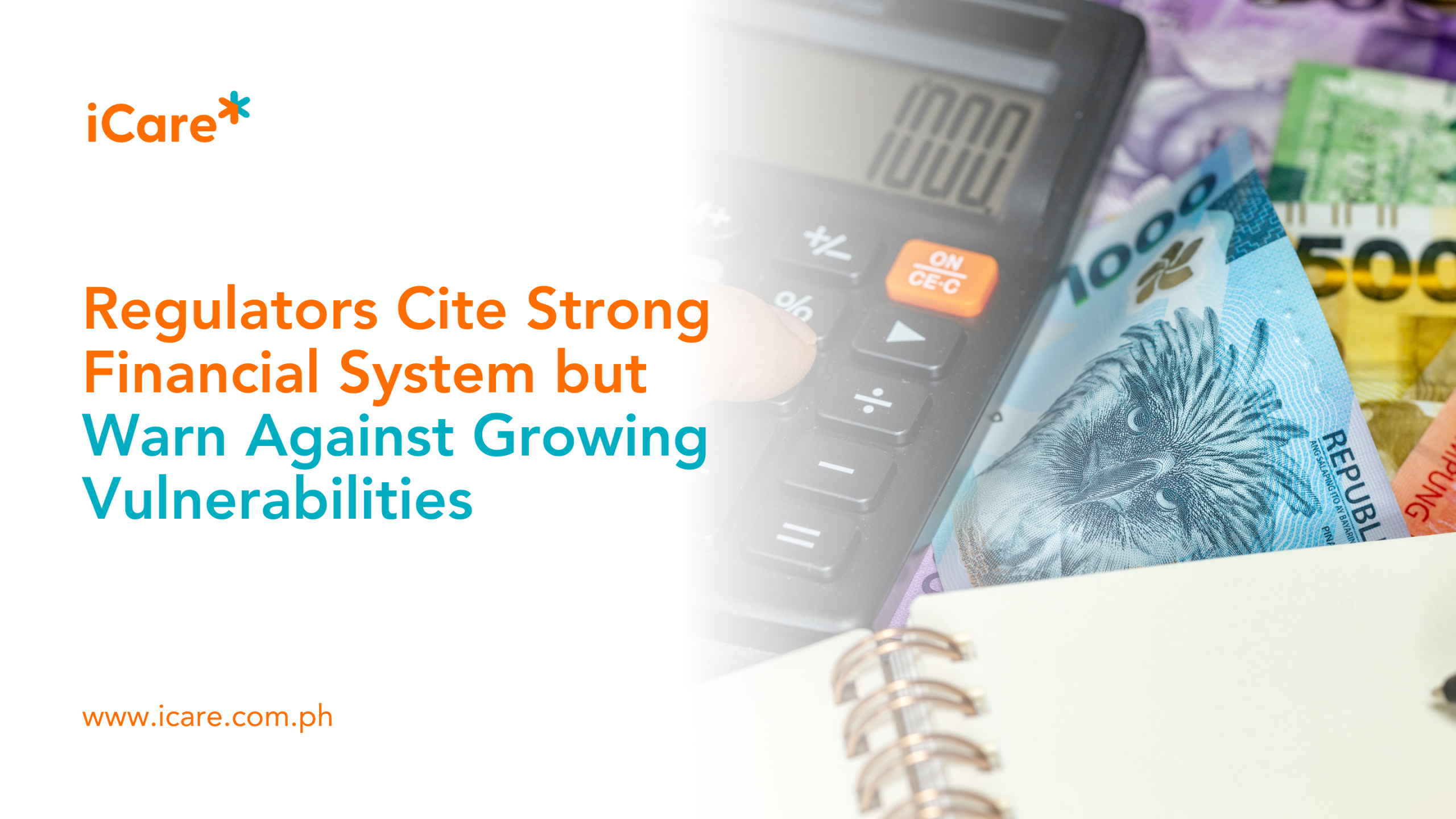
The Financial Stability Coordination Council says the Philippine financial system remained stable in 2025, but rising leverage, property risks, unsecured consumer debt, cyber threats, and geopolitical tensions require closer monitoring.
The Philippines’ top financial regulators have delivered a clear but cautious message midway through 2026: the country’s financial system remained stable last year, but the risks around it are becoming more complex.
In a press release dated 8 June 2026, the Financial Stability Coordination Council (FSCC) announced the release of its 2025 Financial Stability Report, saying: “The Philippine financial system remained stable in 2025. Banks are well-positioned to lend and have sufficient capital to absorb unexpected losses.” The statement captures the central message of the report. The system is resilient, but regulators are not treating resilience as a reason for complacency.
The FSCC is the country’s inter-agency council for financial stability. It is composed of the Bangko Sentral ng Pilipinas, Department of Finance, Insurance Commission, Philippine Deposit Insurance Corporation, and Securities and Exchange Commission. Its role is to assess risks that may not be fully visible when each regulator looks only at its own sector. In practice, this means examining how risks can move across banks, insurers, capital markets, non-bank financial institutions, corporations, households, and the broader economy.
The Council said the 2025 Financial Stability Report identified “pockets of risks that warrant close monitoring.” Among these are an increase in leverage across sectors, elevated property prices, higher lending to certain sectors including conglomerates, and the growth of unsecured consumer loans, mostly credit card debt. The report also cited cyber threats and geopolitical tensions, including the conflict in the Middle East.
FSCC Chairman and BSP Governor Eli M. Remolona Jr. said financial regulators will strengthen coordination in managing these risks. “We will sharpen our coordination by defining when to escalate issues and by clearly communicating our assessment of our respective regulated entities,” he said in the press release. He added: “These risks underscore the need for vigilance and coordinated oversight among regulators.”
The timing of the report matters. The 2025 Financial Stability Report was released at a point when economies continue to deal with geopolitical uncertainty, shifting trade policies, cyber risk, higher debt levels, and uneven confidence across sectors. For the Philippines, the report offers more than a technical assessment of banks and markets. It provides a view of how financial risks can affect businesses, households, employers, healthcare providers, insurers, HMOs, and other institutions that support everyday economic life.
The report noted that the Philippine economy expanded by 4.4 percent in 2025. Household consumption grew by 4.6 percent, while gross capital formation contracted by 2.1 percent, which the report linked to slower public infrastructure spending and weaker investor confidence. Export growth helped offset headwinds from new trade measures, while labor market conditions remained generally stable. Inflation stayed within the BSP forecast range for most of the year, allowing the central bank to reduce its policy rate by a cumulative 125 basis points to 4.5 percent.
These conditions supported financial stability, but they also show why regulators are watching the system carefully. A stable financial system does not mean risks have disappeared. It means that institutions currently have the capacity to absorb shocks, provided vulnerabilities are not allowed to build unchecked.
The banking sector remains the system’s main source of strength. According to the report, banks continued to demonstrate resilience, supported by strong capital, prudent regulation, adequate loan-loss provisions, and a well-functioning payment system. The report also said recent BSP early warning system results point to the country’s resilience to external shocks, supported by manageable external financing needs and ample reserve buffers.
The more important finding, however, is that the risks are changing. The FSCC identified domestic credit dynamics and real estate market imbalances as major sources of potential risk. It pointed to three structural factors requiring close monitoring: rising leverage in household and corporate sectors, elevated property prices and uneven demand amid high vacancy rates, and concentrated financial sector exposures, particularly to unsecured consumer credit and conglomerate borrowings.
These may sound like issues for bankers and regulators, but they are also relevant to ordinary Filipinos and businesses. Rising household leverage can affect consumer confidence and spending. Higher corporate debt can affect investment, hiring, and business resilience. Property market imbalances can influence banks, developers, landlords, investors, and employers. Cyber threats can disrupt financial institutions, insurers, healthcare providers, clinics, hospitals, payment systems, and customer service channels. Geopolitical shocks can affect oil prices, inflation, exchange rates, trade, and financial markets.
This is why the FSCC’s inter-agency structure is important. The financial system is no longer neatly divided into separate sectors. A large conglomerate may borrow from banks, issue securities, own property assets, operate businesses across industries, and maintain relationships with insurers, suppliers, customers, and employees. A household may hold bank deposits, use credit cards, maintain insurance, rely on an employer-provided HMO, and access digital financial services. Stress in one part of the system can move quickly into another.
The report also gives special attention to non-bank financial institutions and non-financial corporations. The FSCC said it would strengthen oversight of non-financial corporations, especially complex conglomerates, and expand data coverage for non-bank financial institutions. This is significant because systemic risk can accumulate outside the banking system. As financial activity becomes more diversified, regulators need better information on institutions and sectors that may not be bank-like in form but can still transmit risk.
For the healthcare sector, the message is especially relevant. HMOs, insurers, hospitals, clinics, healthcare providers, and employers all operate within a broader financial system that must remain trusted and stable. Healthcare financing depends on timely payments, sound reserves, reliable provider networks, strong customer service, responsible benefit design, and the ability of employers and households to afford coverage. When financial stress rises, healthcare access can also come under pressure.
This connection has become more important as medical inflation continues to challenge employers and families. Employer-sponsored health benefits are now part of workforce strategy, not merely a traditional HR benefit. Large employers, SMEs, Human Resources teams, CFOs, and business owners increasingly need to manage the cost of health benefits while preserving access to hospitals, clinics, doctors, preventive care, telemedicine, and managed healthcare support.
In this context, HMOs and health insurance providers are part of the country’s wider resilience architecture. Their role is not only to arrange access to care, but to help convert unpredictable medical expenses into more organized and manageable healthcare arrangements. For employees, that can mean faster access to care and reduced financial uncertainty. For employers, it can mean better workforce wellbeing, improved employee experience, and more disciplined management of healthcare costs.
iCare’s work in managed healthcare reflects this broader shift in the market. Its provider network, preventive health initiatives, workplace health programs, and digital services such as Telemed7 are examples of how healthcare providers can support accessibility and cost management in a more financially pressured environment. The relevance of these initiatives is not promotional. It is structural. As healthcare costs rise and the workforce becomes more attentive to health protection, employers need partners that can combine affordability, provider access, customer service, and sustainable utilization management.
The FSCC’s policy response is also concrete. To address emerging vulnerabilities, the Council said it would pursue measures to strengthen financial safeguards. These include activating a tool that allows banks to set aside additional capital during good times, strengthening oversight of non-financial corporations, expanding data coverage for non-bank financial institutions, and operationalizing a systemic crisis management playbook.
The reference to additional capital during good times is important. In financial regulation, this is intended to build buffers before stress emerges. Rather than waiting for problems to appear, regulators can require institutions to prepare while conditions remain favorable. The same principle applies to businesses and healthcare planning. The best time to strengthen financial and health resilience is before a crisis, not when claims, costs, and operational pressures have already escalated.
For corporate leaders, the report should encourage a more integrated view of risk. Financial stability, employee benefits, healthcare access, cybersecurity, and operational resilience are often managed by different teams. Finance focuses on budgets and capital. HR focuses on people. Legal and compliance manage regulation. IT handles systems and cyber risk. Procurement handles vendors. But the FSCC report shows that risks do not respect organizational charts. They move across systems.
A company that treats employee health benefits purely as a cost item may miss the larger issue. Medical inflation can affect workforce morale, absenteeism, retention, and productivity. Weak healthcare access can become an employee experience problem. Poor utilization management can become a cost problem. Weak data protection can become a legal and reputational risk. An inadequate provider network can become an operational issue when employees cannot obtain timely care.
For policymakers, the report reinforces the importance of coordinated regulation. The FSCC’s composition matters because the Philippine economy is interconnected. The BSP, DOF, Insurance Commission, PDIC, and SEC each bring a different view of risk. Together, they are better positioned to monitor vulnerabilities that cut across banking, insurance, capital markets, deposit protection, fiscal policy, corporations, and non-bank financial institutions.
For the general public, the message is simpler. Financial stability helps protect confidence. It helps ensure that banks can lend, deposits remain trusted, financial institutions continue operating, businesses can plan, and households can access essential services. In a country where many workers depend on employer-supported healthcare arrangements, the stability of the financial system is linked to the stability of everyday life.
The 2025 Financial Stability Report is therefore not a warning of imminent crisis. It is a reminder that stability requires active management. The Philippine financial system remained stable in 2025, but rising leverage, property market pressures, unsecured consumer lending, cyber threats, geopolitical tensions, and gaps in non-bank data require continued attention.
The FSCC’s 8 June 2026 press release captures the balance well. The system is strong, but vigilance is necessary. For regulators, that means sharper coordination and clearer escalation. For financial institutions, it means stronger safeguards. For businesses, it means treating financial and workforce resilience as connected priorities. For healthcare leaders, insurers, HMOs, hospitals, clinics, and employers, it means recognizing that healthcare access and financial stability increasingly form part of the same national conversation.
The next phase of resilience will depend not only on whether the Philippines can withstand shocks, but on whether institutions can identify risks early, coordinate effectively, and protect confidence before pressure becomes visible. That is the central lesson of the FSCC’s latest report: stability is not a static condition. It is a discipline.
Sources and References
Financial Stability Coordination Council. Press Release: 2025 Financial Stability Report Highlights System Resilience, Regulatory Vigilance. 8 June 2026.
Financial Stability Coordination Council. 2025 Financial Stability Report. Bangko Sentral ng Pilipinas. https://www.bsp.gov.ph/Media_And_Research/FSR/FSR2025.pdf
Bangko Sentral ng Pilipinas. Financial Stability Coordination Council materials and financial stability publications. https://www.bsp.gov.ph
Insurance Commission. 2025 Financial Stability Report Highlights System Resilience, Regulatory Vigilance. https://www.insurance.gov.ph/2025-financial-stability-report-highlights-system-resilience-regulatory-vigilance/
iCare HMO Philippines. Accredited Hospitals and Clinics. https://icare.com.ph/accredited-hospitals-and-clinics/
iCare HMO Philippines. Telemedicine, Telemed7. https://icare.com.ph/telemedicine/
