

September 8, 2026 Why Women’s Healthcare Should Extend Beyond Maternity Care
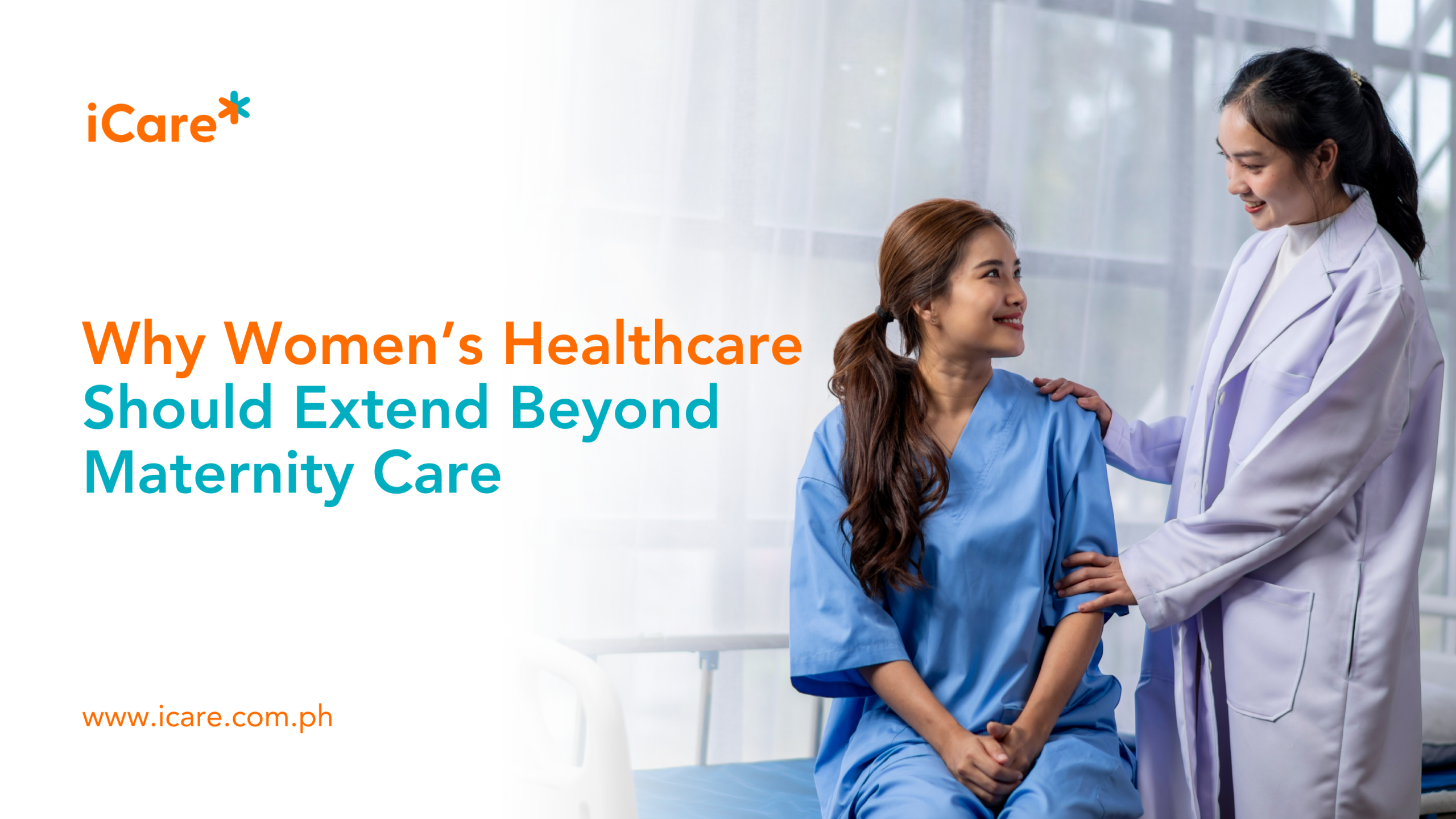
Maternity benefits remain essential, but a healthcare strategy centered mainly on pregnancy overlooks the conditions that affect women’s health, earning capacity, and quality of life throughout adulthood.
In many employee benefits programs, women’s healthcare becomes most visible during pregnancy. Prenatal consultations, childbirth, postnatal care, and newborn services often have clearly defined coverage and care pathways. Outside maternity care, however, support can be less consistent. Menstrual and gynecological conditions, cancer screening, cardiovascular risk, mental health, chronic disease, menopause, and healthy aging may receive limited coverage or be left for employees to manage on their own.
This does not mean maternity care should receive less attention. Pregnancy and childbirth still require accessible, high-quality, and financially protective services. The problem begins when maternity becomes the main framework for women’s healthcare rather than one part of a much longer health journey.
Philippine law already recognizes this distinction. Republic Act No. 9710, or the Magna Carta of Women, calls for comprehensive, culturally sensitive, and gender-responsive health services at every stage of a woman’s life. Its provisions cover more than maternal care. They also address reproductive cancers, gynecological disorders, mental health, violence-related care, healthy lifestyles, and services for women beyond their childbearing years.
The country’s health data support the same conclusion. According to the Philippine Statistics Authority’s 2026 Fact Sheet on Women and Men, the leading registered causes of death among women in 2024 were ischemic heart diseases, with 55,101 deaths, neoplasms, with 42,865, and cerebrovascular diseases, with 29,908. These are not primarily maternity-related conditions. They are chronic and often progressive health risks that require prevention, early detection, primary care, treatment, and long-term management.
Women’s Health Is More Than Reproductive Health
Women’s health is often treated as another term for sexual, reproductive, and maternal health. These areas are essential, but they do not represent the full range of health needs women experience.
A 2024 report from the World Economic Forum and McKinsey Health Institute used Global Burden of Disease data to examine conditions that are specific to women, affect women disproportionately, affect women differently, or affect women and men at similar rates. In its model, women-specific conditions, including maternal and gynecological conditions, accounted for about 5 percent of women’s total health burden. Another 51 percent came from conditions that affected women disproportionately or differently. Nearly half of the health burden identified in the analysis affected women during their working years.
These figures are global estimates based on a specific analytical model, not Philippine prevalence data. They should therefore be viewed as an indication of scale rather than an exact picture of the local population. Even so, the broader conclusion remains relevant: women’s health cannot be understood by looking only at pregnancy, childbirth, and fertility.
Women may need care for conditions that are biologically specific, including endometriosis, polycystic ovary syndrome, uterine disorders, and menopause. They may also experience common conditions differently or at higher rates, including cardiovascular disease, autoimmune disorders, depression, migraine, osteoporosis, and certain cancers.
Access to care is also shaped by social and economic conditions. Unpaid caregiving, workplace demands, financial dependence, discrimination, and exposure to violence can influence when women seek treatment and whether they complete it. The World Health Organization therefore describes women’s health as a life-course issue influenced by biological, social, economic, and structural factors.
This broader view also prevents employers and healthcare providers from treating women as one uniform group. A 23-year-old employee with severe menstrual symptoms, a 38-year-old managing hypertension after pregnancy, a 47-year-old experiencing menopause symptoms, and a 65-year-old requiring cancer and bone health services have very different needs. A benefit design focused almost entirely on childbirth will not serve all of them well.
The Philippine Health Burden Is Already Clear
Cancer is one of the strongest examples of why women’s healthcare must extend beyond maternity care.
The International Agency for Research on Cancer’s GLOBOCAN 2024 estimates indicate that about 88,730 new cancer cases occurred among women in the Philippines in 2024, along with an estimated 45,113 cancer deaths. Breast cancer accounted for an estimated 28,124 new cases, or 31.7 percent of cancers among women, while cervical cancer accounted for about 7,829 cases.
These figures are modeled estimates rather than a complete national cancer registry count. Still, they show the scale of the need for screening, diagnosis, patient navigation, treatment, and survivorship care.
The screening gap remains significant. A 2025 PhilHealth circular reported that only 830,691 women, or 2.5 percent of the relevant indicator population, were screened for breast masses in 2023. The circular identified recall-system and logistical limitations as contributing factors and established quality standards for breast cancer risk assessment and screening through accredited providers.
Women’s healthcare also intersects with the broader rise of noncommunicable diseases. The 2026 PSA fact sheet reported that 45.4 percent of Filipino women ages 20 to 59 were classified as obese in the 2023 National Nutrition Survey, compared with 35.2 percent of men. Obesity does not mean that every person will develop a related condition, but population-level findings support the need for sustained cardiovascular, metabolic, nutritional, and preventive care rather than isolated medical interventions.
The need for life-course care will become more important as the population ages. PSA’s 2026 projections place female life expectancy at birth at 74.6 years, compared with 68.05 years for men. Living longer does not automatically mean living more years in good health. It creates greater demand for services addressing chronic disease, cancer, bone and joint health, cognitive decline, mental well-being, and functional independence after the reproductive years.
Why Employers Should Pay Attention
Women’s healthcare is not only a concern for hospitals, clinics, and public health agencies. It is also a workforce and business issue.
Women’s labor force participation rate in the Philippines was estimated at 53.4 percent in 2025. Among women who participated in the labor force, the employment rate was 95.7 percent. These figures represent millions of employees, professionals, entrepreneurs, public servants, and workers whose health affects household income, organizational performance, and economic participation.
When employee benefits cover maternity care but offer limited support for other conditions, women may delay consultations, seek emergency treatment for problems that could have been managed earlier, or move between healthcare providers without continuity. Employers may feel the effects through absenteeism, presenteeism, repeated consultations, delayed diagnosis, preventable complications, and the loss of experienced employees.
Menopause illustrates the issue. Philippine-specific workplace data remain limited, so international findings should not be applied directly to Filipino employees. However, a 2023 study by the UK-based Chartered Institute of Personnel and Development found that 67 percent of employed women ages 40 to 60 who had experienced menopause symptoms said those symptoms had a mostly negative effect at work. More than one-quarter reported a negative effect on career progression.
These findings do not establish the same prevalence in the Philippines. They do, however, highlight a workplace health issue that local employers and researchers have not yet studied in sufficient depth.
Mental health requires similar attention. The World Health Organization estimates that depression and anxiety account for 12 billion lost working days globally each year and about US$1 trillion in lost productivity. WHO also reports that depression affects more women than men, although individual risk depends on a combination of biological, psychological, occupational, and social factors.
Employers must respond while managing rising healthcare costs. Aon projects that employee medical plan costs across Asia Pacific will increase by 11.3 percent in 2026. This pressure does not justify adding benefits without a clear strategy. It makes thoughtful benefit design more important.
Prevention, early intervention, coordinated primary care, and effective patient navigation can offer a more sustainable approach than waiting for conditions to become severe and expensive. The goal is not simply to expand coverage. It is to direct resources toward care that reduces avoidable delays and improves long-term health outcomes.
Building a Continuum of Care
A stronger women’s health strategy begins with reliable data, but it should not reduce employees to demographic assumptions. Employers, HMOs, and healthcare providers can examine sex-disaggregated claims, screening rates, consultation patterns, referral completion, and access across age groups. They must also protect medical confidentiality and comply with data privacy requirements.
The purpose is not to assume that every woman needs the same services. It is to identify where current benefits do not match documented health needs.
The Insurance Commission has already encouraged this direction. Its 2025 advisory called on insurers and HMOs to develop gender-sensitive programs and use sex-disaggregated data to understand the needs of women and men across their life cycles and financial circumstances. In July 2026, The Philippine Star reported that the regulator had identified 22 approved gender-specific insurance and HMO products, including products focused on breast cancer, reproductive care, maternity care, and diagnostic services.
Effective benefit design should connect services instead of treating them as separate transactions. Maternity care should lead to primary care and appropriate follow-up after pregnancy. Annual health assessments should lead to risk-based screening and clear referral pathways. Mental health support should be available before an employee reaches a crisis. Gynecological symptoms should not be dismissed as an unavoidable part of being a woman.
Menopause support should also include reliable health information, access to qualified professionals, reasonable workplace adjustments when appropriate, and protection from stigma. These measures do not require employers to make medical decisions. They require employers to create an environment in which employees can seek appropriate care without unnecessary barriers.
The route to care matters as much as the benefit itself. Coverage has limited value when the nearest accredited hospital or clinic is difficult to reach, specialist appointments are unavailable, or employees cannot understand authorization and referral procedures. Provider network access, teleconsultation, primary care availability, customer service, and continuity between digital and in-person services are therefore central to women’s healthcare design.
Current iCare initiatives offer examples of how an HMO can take part in this broader model. The Insurance Commission’s 2026 list, as reported by both The Philippine Star and iCare, included iCare’s She’s Well diagnostic package alongside its Maternity Care package. This combination is significant because it places maternity within a wider women’s health portfolio instead of treating it as the only specialized need.
Large employers may have the resources to build extensive population health programs, specialized clinical pathways, and detailed utilization analytics. SMEs may need a more focused model. For smaller organizations, the priorities may include a dependable HMO network, accessible primary care, teleconsultation, essential screening, mental health support, clear referral procedures, and benefits communication that employees can easily understand.
iCare has its own telemedicine service called Telemed7. iCare currently has a provider network of more than 2,000 accredited hospitals and clinics, with over 50,000 accredited medical practitioners.
Comprehensive care does not always require a long list of expensive benefits. It requires a connected system in which essential services are accessible, clearly explained, and designed around actual health risks.
A Broader Definition of Women’s Healthcare
Healthcare for women should not begin with pregnancy and fade after childbirth. It should recognize that women’s health changes over time and that the consequences of delayed care can affect families, workplaces, healthcare providers, and the wider economy.
For Philippine employers, the key question is no longer whether maternity benefits are sufficient. The more important question is whether the entire health program reflects the risks women face throughout their lives.
That requires greater attention to preventive care, cancer screening, cardiovascular and metabolic health, mental well-being, gynecological care, menopause, chronic disease management, and healthy aging. It also requires provider networks, hospitals, clinics, digital health services, and customer support systems that can move patients from consultation to diagnosis and treatment without unnecessary delays.
Maternity care must remain strong. It should be part of an ongoing relationship with healthcare, not the limit of women’s health coverage.
Sources and References
World Health Organization. “Women’s Health.”
https://www.who.int/health-topics/women-s-health
Republic of the Philippines. Republic Act No. 9710, Magna Carta of Women.
https://lawphil.net/statutes/repacts/ra2009/ra_9710_2009.html
Philippine Statistics Authority. “2026 Fact Sheet on Women and Men in the Philippines.” April 30, 2026.
https://psa.gov.ph/sites/default/files/phdsd/2026-Fact-Sheet-on-Women-and-Men_30Apr2026.pdf
Philippine Statistics Authority. “2026 Fact Sheet on Women and Men in the Philippines: Health and Nutrition.”
https://psa.gov.ph/sites/default/files/phdsd/2026-Fact-Sheet-Health-and-Nutrition.pdf
International Agency for Research on Cancer. “Global Cancer Observatory: Philippines Fact Sheet, GLOBOCAN 2024.”
https://gco.iarc.who.int/media/globocan/factsheets/populations/608-philippines-fact-sheet.pdf
World Economic Forum and McKinsey Health Institute. “Closing the Women’s Health Gap: A $1 Trillion Opportunity to Improve Lives and Economies.” January 17, 2024.
Philippine Health Insurance Corporation. PhilHealth Circular No. 2025-0024, “Quality Standards on the Screening for Breast Cancer.”
https://www.philhealth.gov.ph/circulars/2025/PC2025-0024.pdf
Philippine Health Insurance Corporation. PhilHealth Circular No. 2025-0014, “Benefit Packages for Selected Outpatient Cancer Screening Tests.”
https://www.philhealth.gov.ph/circulars/2025/PC2025-0014.pdf
World Health Organization. “Mental Health at Work.” September 2, 2024.
https://www.who.int/news-room/fact-sheets/detail/mental-health-at-work
World Health Organization. “Depressive Disorder.”
https://www.who.int/news-room/fact-sheets/detail/depression
Chartered Institute of Personnel and Development. “Menopause in the Workplace: Employee Experiences in 2023.”
https://www.cipd.org/en/knowledge/reports/menopause-workplace-experiences/
Aon. “2026 Global Medical Trend Rates Report: Asia Pacific Insights.”
https://www.aon.com/apac/insights/blog/default/2026-medical-trend-rates-insights-asia-pacific
Insurance Commission of the Philippines. Advisory No. RS-2025-009, “IC-Approved Gender-Specific Insurance and HMO Products.” March 26, 2025.
The Philippine Star. “IC Clears Gender-Specific Insurance, HMO Products.” July 18, 2026.
iCare HMO Philippines. “Insurance Commission Lists Approved Gender-Specific Insurance and HMO Products, Including Two from iCare.” July 28, 2026.
iCare HMO Philippines. “iCare Accredited Health Partners in the Philippines.”
https://icare.com.ph/icare-accredited-health-partners/
iCare HMO Philippines. “What Is Your Resiliency Costing You?” July 3, 2026.
https://icare.com.ph/2026/07/03/what-is-your-resiliency-costing-you/
iCare HMO Philippines. “iCare Telemed7: Online Doctor Consultation in the Philippines.” February 12, 2026.
